Hans
Walser, [20260606]
Similar
Rectangular Faces
Suggestion:
S. U., V.
1
What
it's about
A spiral
figure with cuboids whose edges form a geometric sequence (Fig. 0).
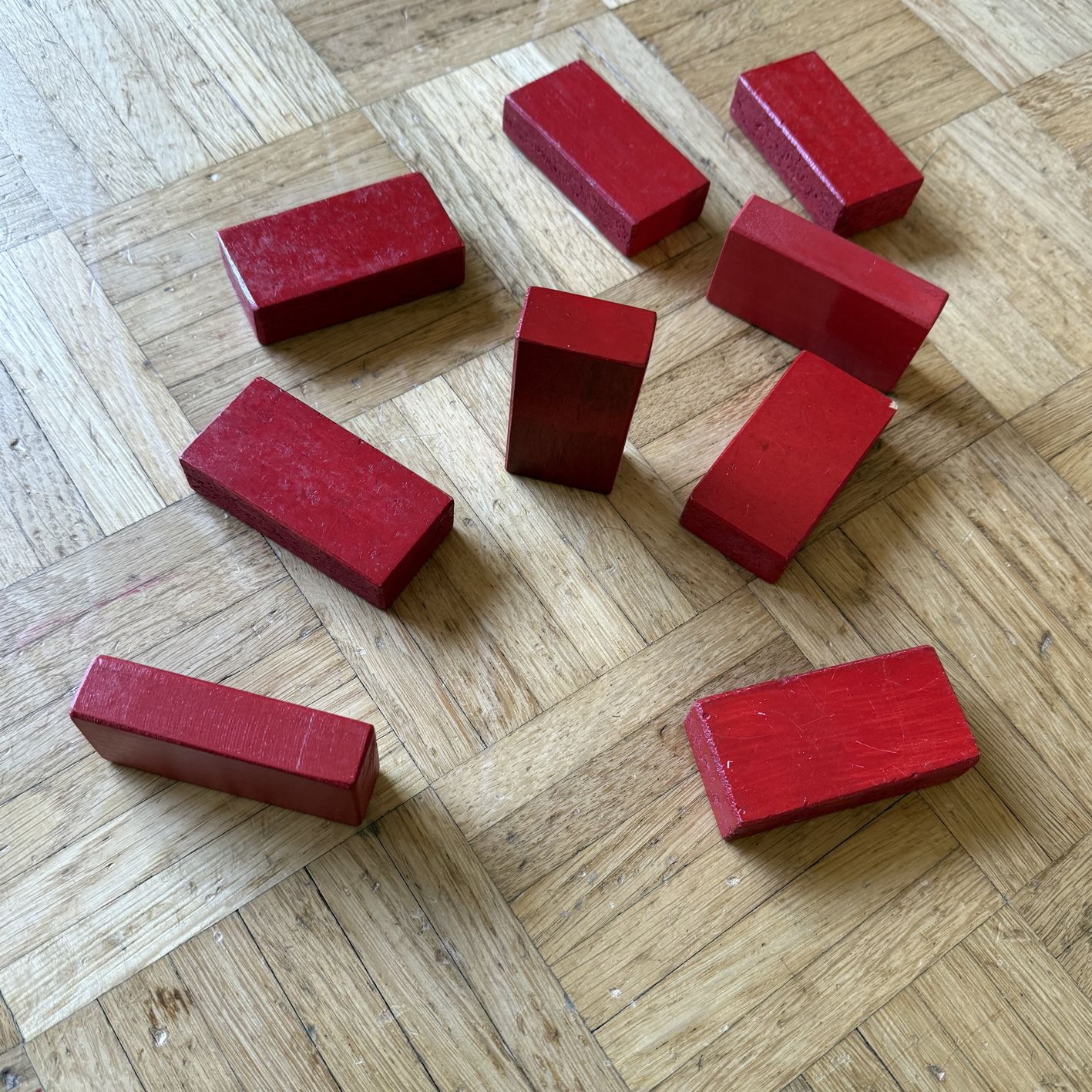
Fig.
0: Cuboid as game material
2
The
cuboid
A cuboid
with edge lengths 1, a, a2 (Fig. 1 and Fig. 2 for a
= ½) has rectangular faces with dimensions 1×a, a×a2,
and 1×a2. The first two rectangular faces are similar; the
third is too long.

Fig.
1: Cuboid

Fig.
2: Cuboid net
3
Scaling
and positioning
We scale
a copy of the cuboid by the factor a and position the scaled copy on a
matching rectangular face (orange in Fig. 3).

Fig.
3: Scaling and positioning
4
Iteration
We can
iterate the process (dark yellow in Fig. 4).
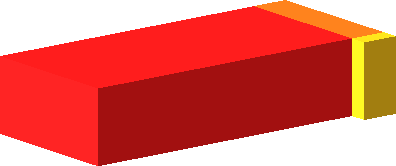
Fig.
4: Iteration
In the
next step (light yellow in Fig. 5), a cuboid is formed that is oriented the
same as the initial cuboid but scaled by a factor of a³ relative to the initial
cuboid.
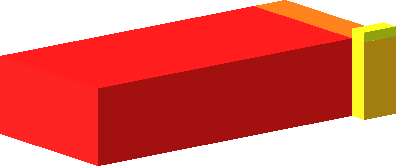
Fig.
5: Next Step
Figure 6
shows further steps.
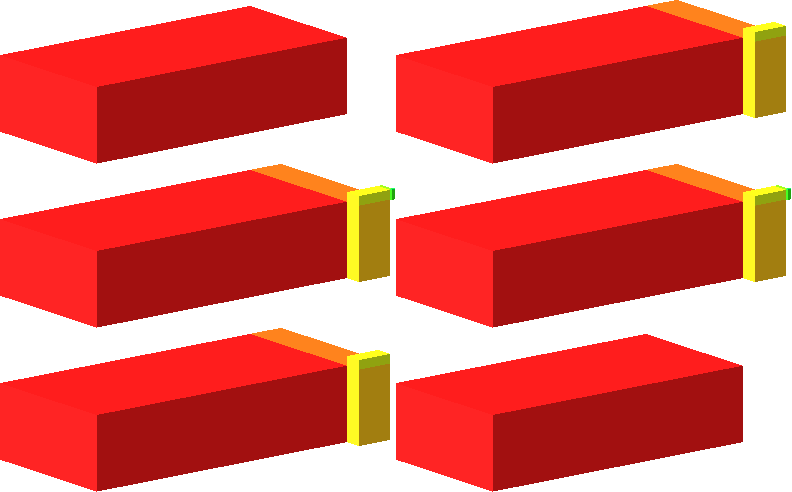
Fig.
6: Further Steps
Since a
= ½ is small compared to 1, the sequence an
rapidly converges to 0, and we cannot see any further steps.
5
Other
Scaling Factors
In the
trivial case a = 1, we obtain cubes (Fig. 7). The figure is a
left-handed helix.

Fig.
7: Cubes
Figure 8
shows the situation for a = ⅘.
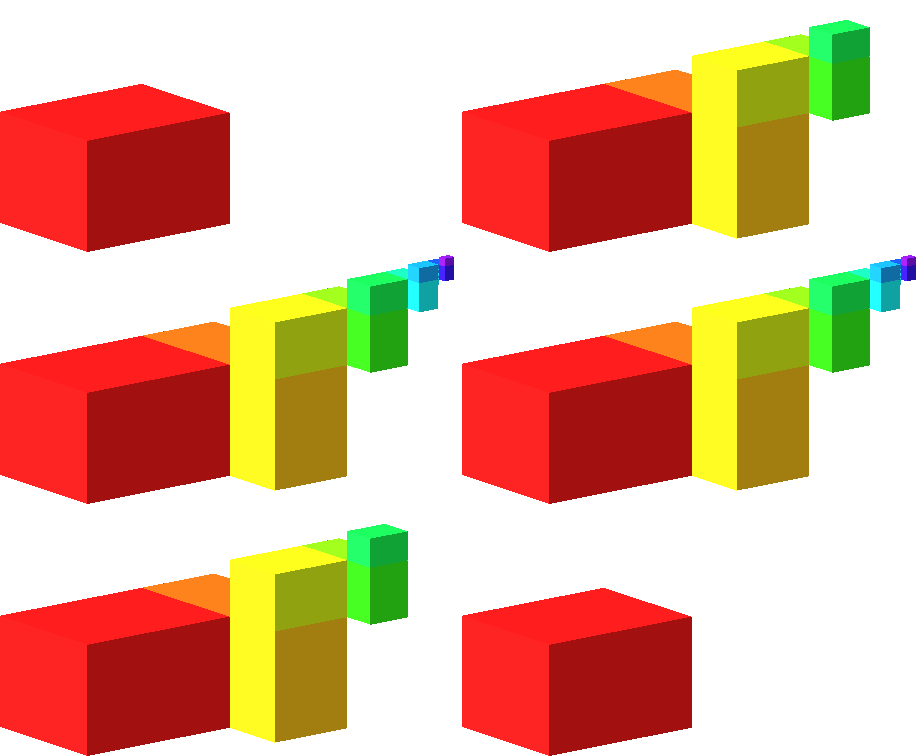
Fig. 8: a = ⅘
References
Walser, Hans (2022): Spiralen, Schraubenlinien und spiralartige Figuren. Mathematische Spielereien in zwei und drei Dimensionen. Springer Spektrum. ISBN 978-3-662-65131-5 und ISBN 978-3-662-65132-2 (eBook).
Walser, Hans (2024): Spirals,
Helical Lines, and Spiral-Like Figures. Mathematical Playfulness in Two and
Three Dimensions. Springer.
ISBN 978-3-662-68930-1, ISBN 978-3-662-68931-8 (eBook)
https://doi.org/10.1007/978-3-662-68931-8