Hans
Walser, [20260707]
Sandpiles
Translated
from German using AI.
1
What
it's about
Modeling
erosion
Counting
problem
Figures
2
Description
Iteration:
We imagine several stacks of squares placed side by side. We also choose an upper
bound, for example, 3. If a stack is higher than the upper bound, we remove the
top two squares and add one square each to the adjacent stacks on the left and
right.
We start
with a single stack of initial height n.
Interpreting
the squares as grains of sand leads to a model of the erosion of a sandpile.
Hence the title.
3
Example
We choose
the initial height n = 11 and the upper bound 3. At the start, we have a
stack of eleven squares (Fig. 1.0).
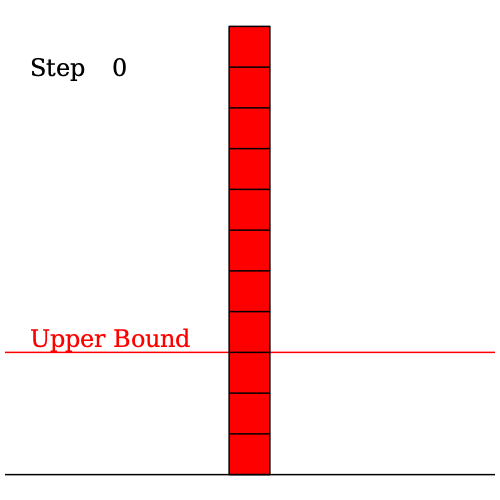
Fig.
1.0: Initial situation
Since 11
exceeds the upper bound 3, the stack is reduced by two squares. These are added
to the (initially empty) stacks on the left and right (Fig. 1.1).

Fig.
1.1: Step 1
The
height of the central stack (9) still exceeds the upper bound of 3. It is
reduced again by two squares, which are added to the stacks on the left and
right (Fig. 1.2).
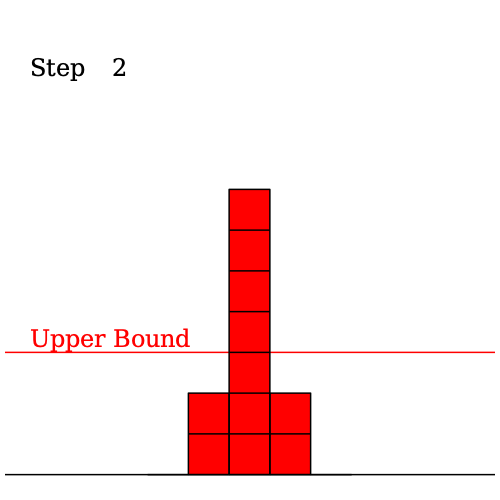
Fig.
1.2: Step 2
The
height of the central stack (7) still exceeds the upper bound of 3. It is
reduced again by two squares, which are added to the stacks on the left and
right (Fig. 1.3).
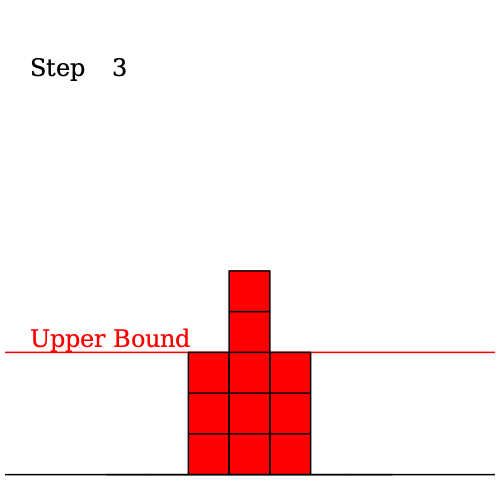
Fig.
1.3: Step 3
The
height of the central stack (5) still exceeds the upper bound of 3. It is
reduced again by two squares, which are added to the stacks on the left and
right (Fig. 1.4).
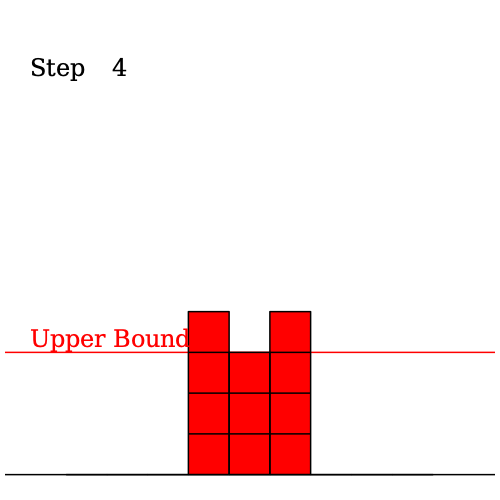
Fig.
1.4: Step 4
Now the
middle stack is within the limit, but the two stacks on the left and right are
too high. They are each reduced by two squares. One square from the stack on
the left is moved all the way to the left to the adjacent stack, and the other
is moved to the stack in the middle. The two squares from the stack on the
right are handled accordingly (Fig. 1.5).
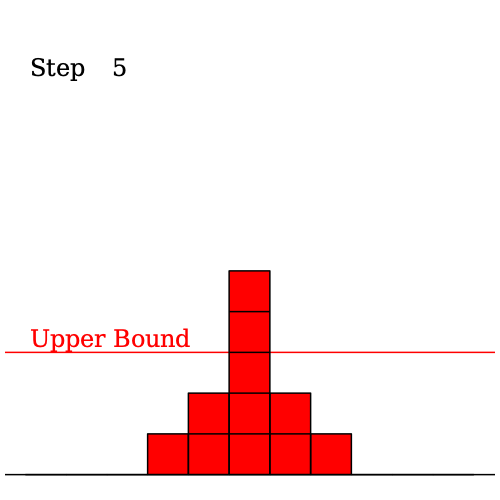
Fig.
1.5: Step 5
Now the
stack in the middle is too high again. It loses its two top squares. These go
to the stacks to its left and right (Fig. 1.6).
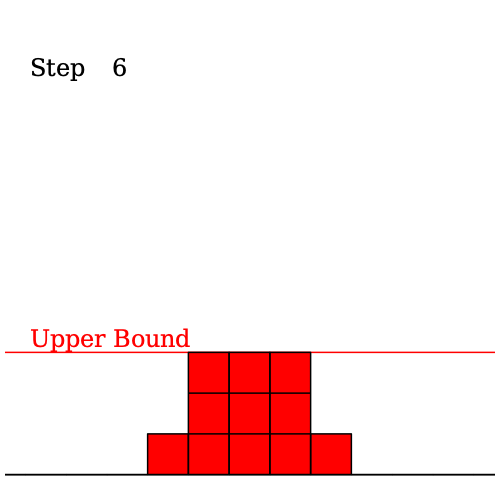
Fig.
1.6: Step 6
Now
everything is in order. The game is over. We need six steps to reach the final
position.
The
animation (Fig. 2) shows the steps every second.
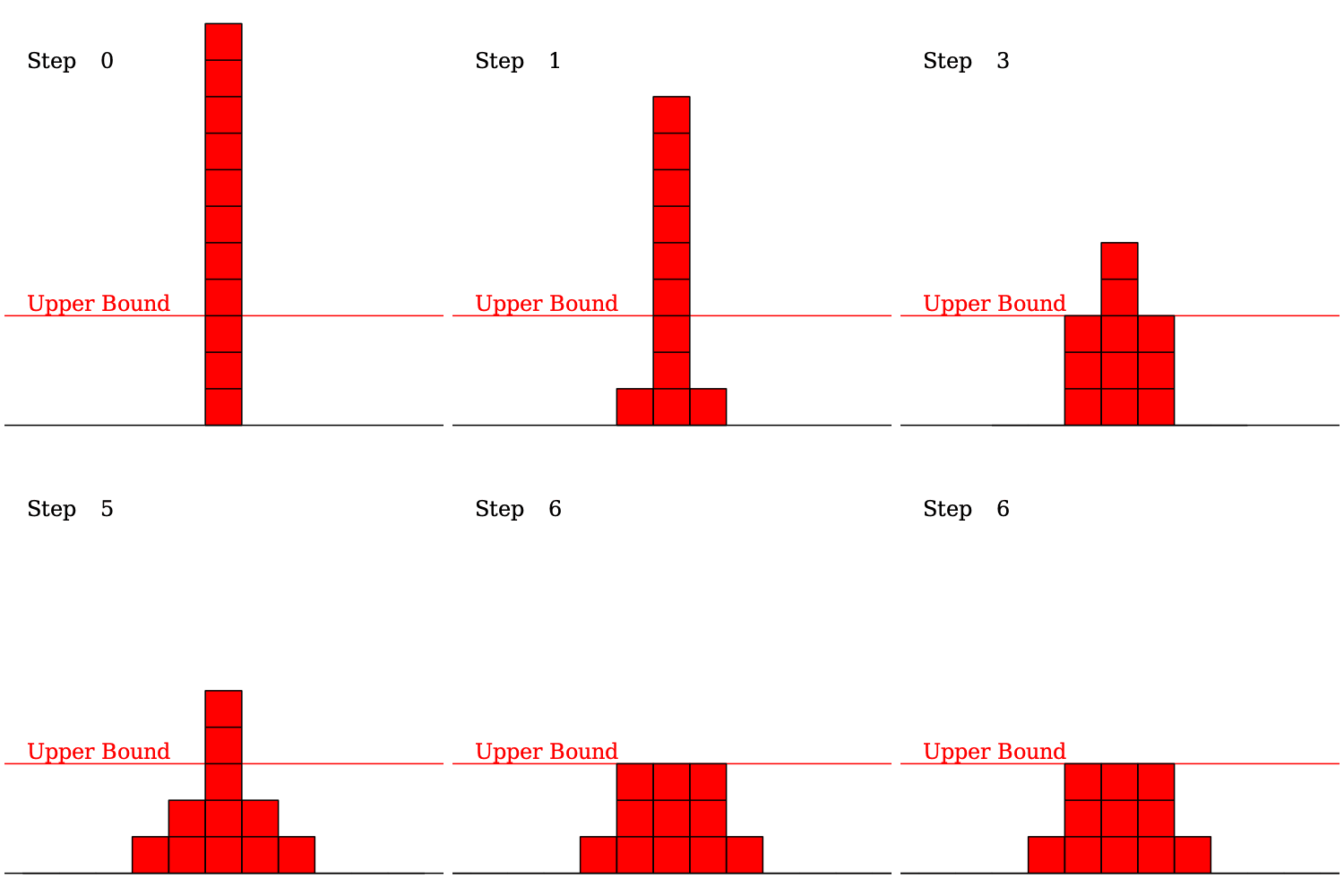
Fig.
2: Steps
For n
= 11 and upper bound 1, the steps are shown in Fig. 3. We need 21 steps.
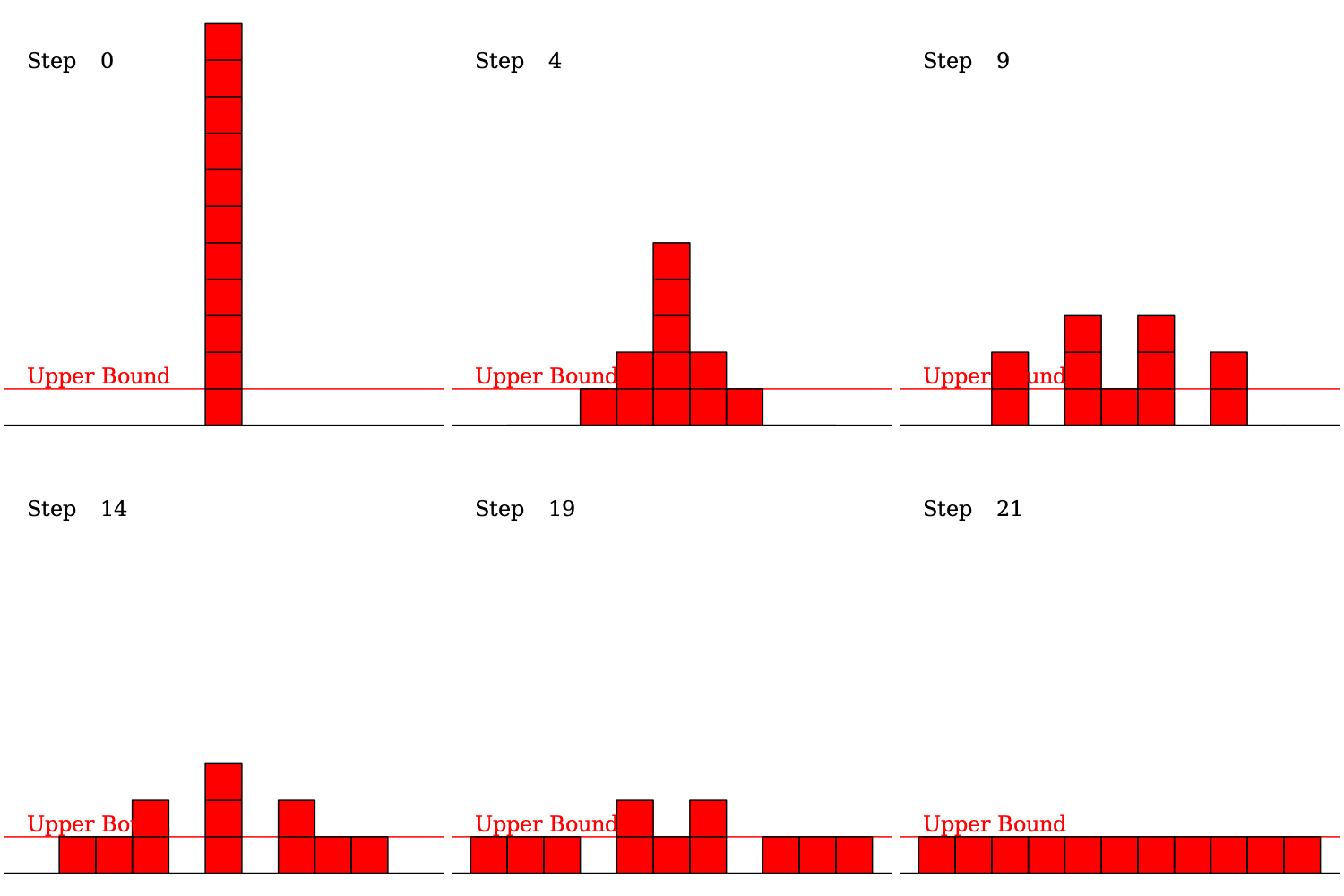
Fig.
3: Upper Bound 1
For n
= 11 and upper bound 2, we need 11 steps (Fig. 4).
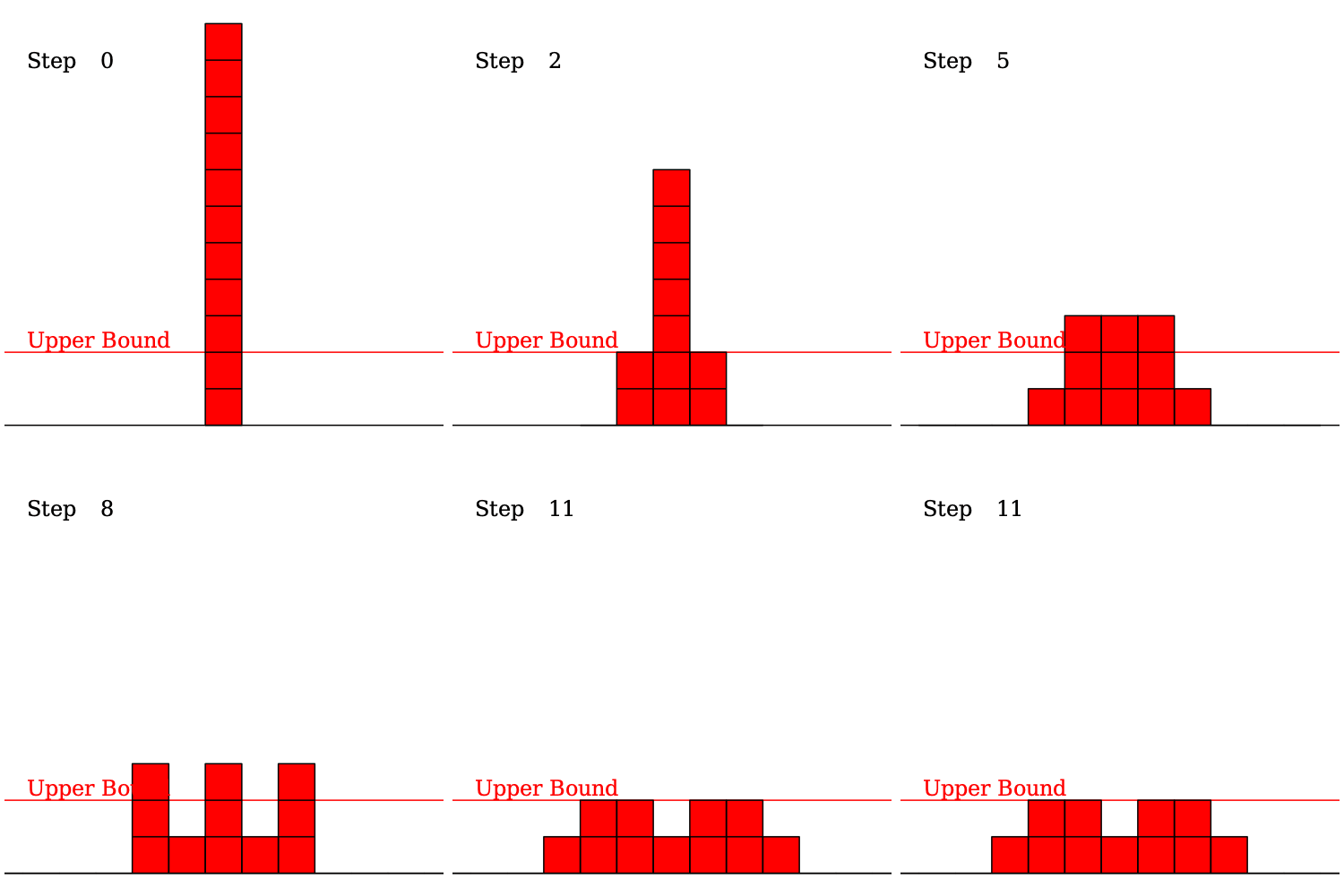
Fig.
4: Upper Bound 2
4
Further
Examples
4.1 Starting Height 12
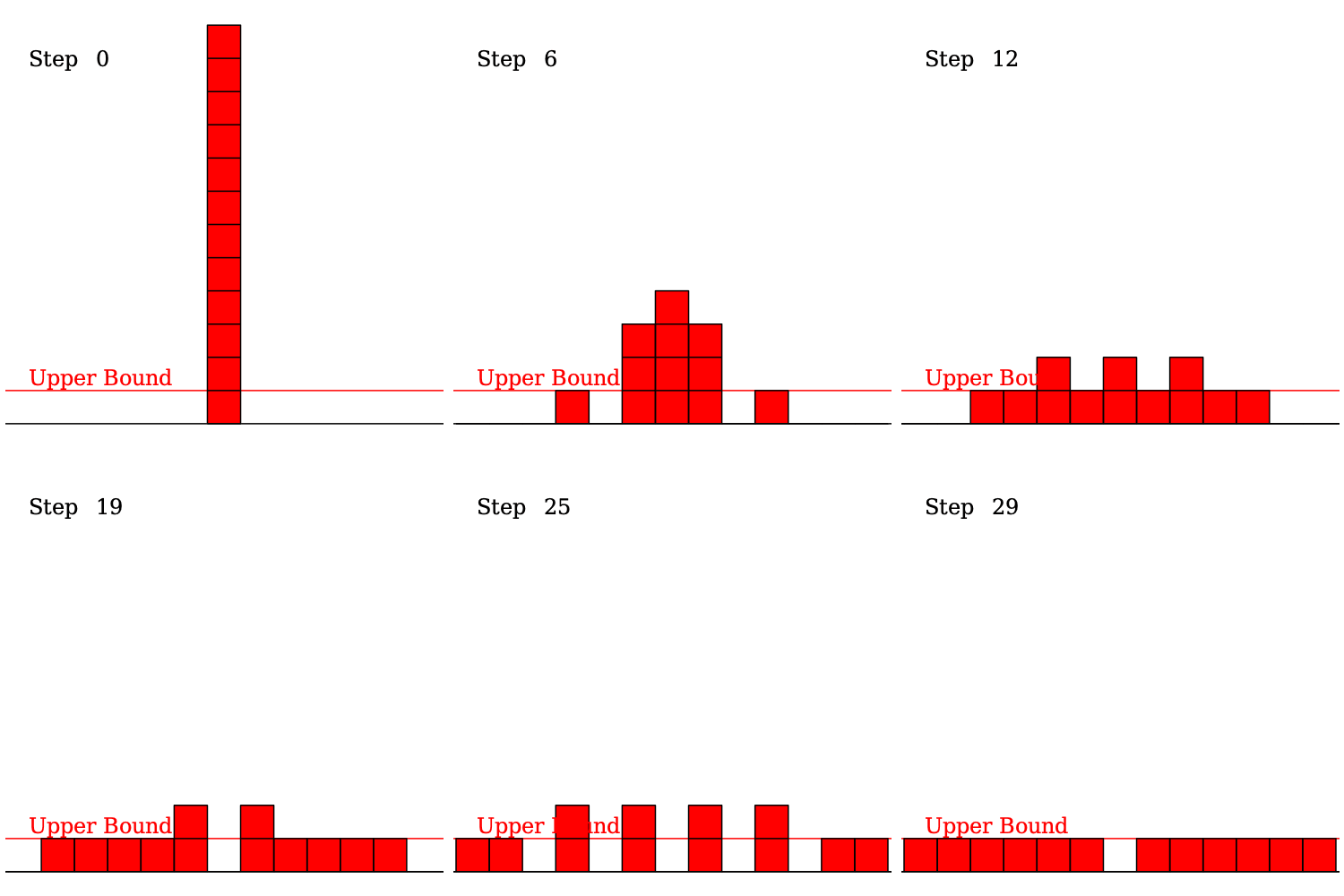
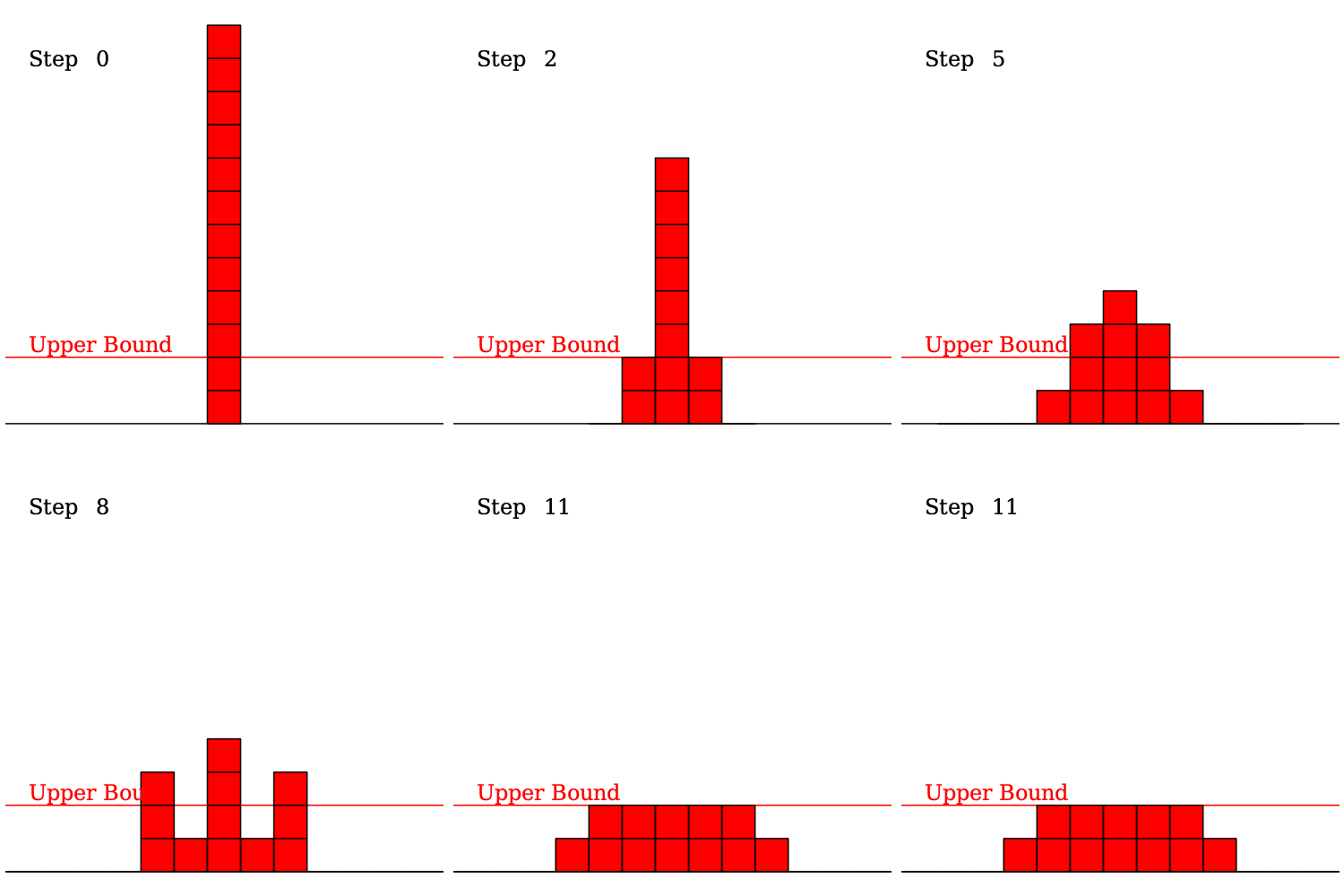
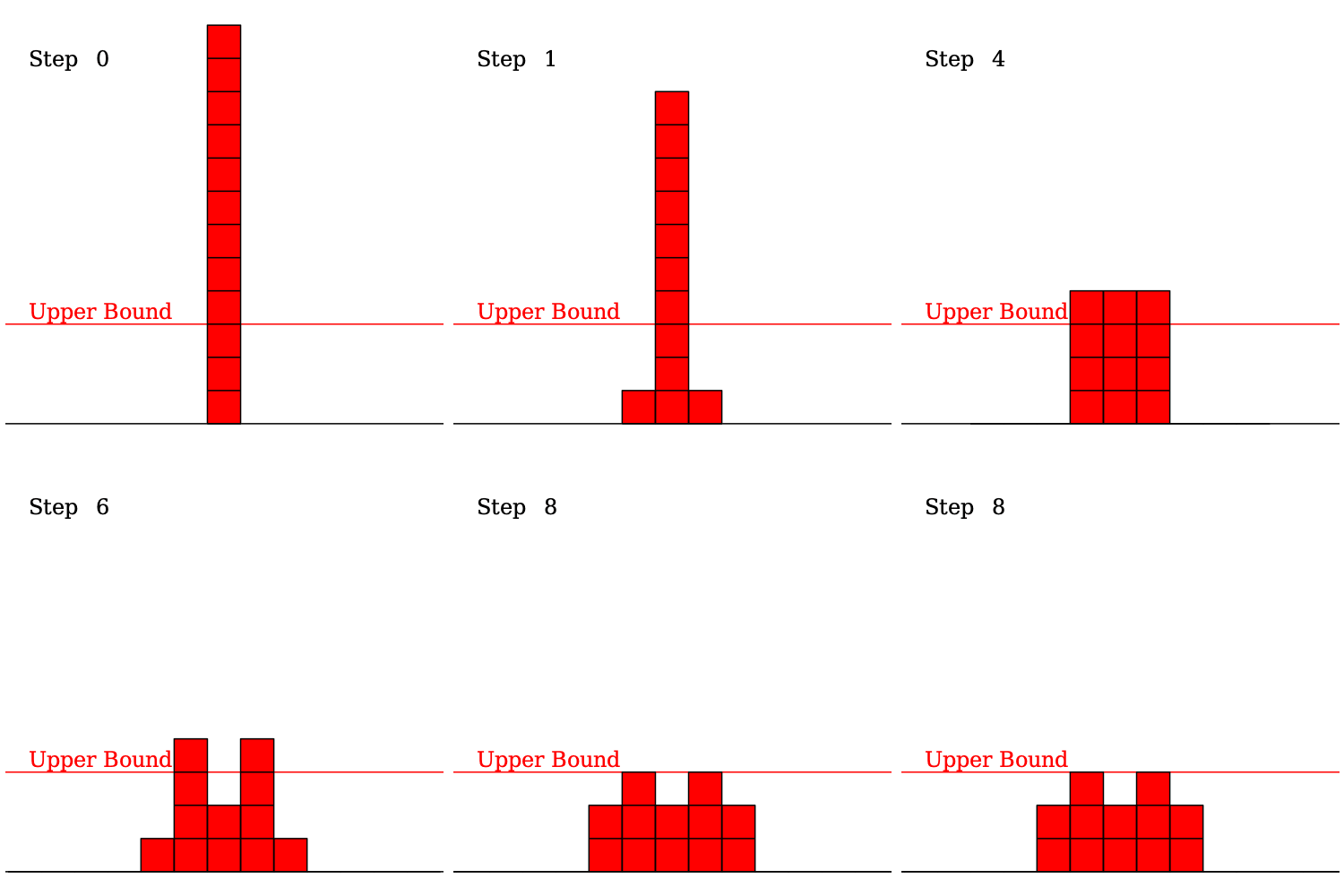
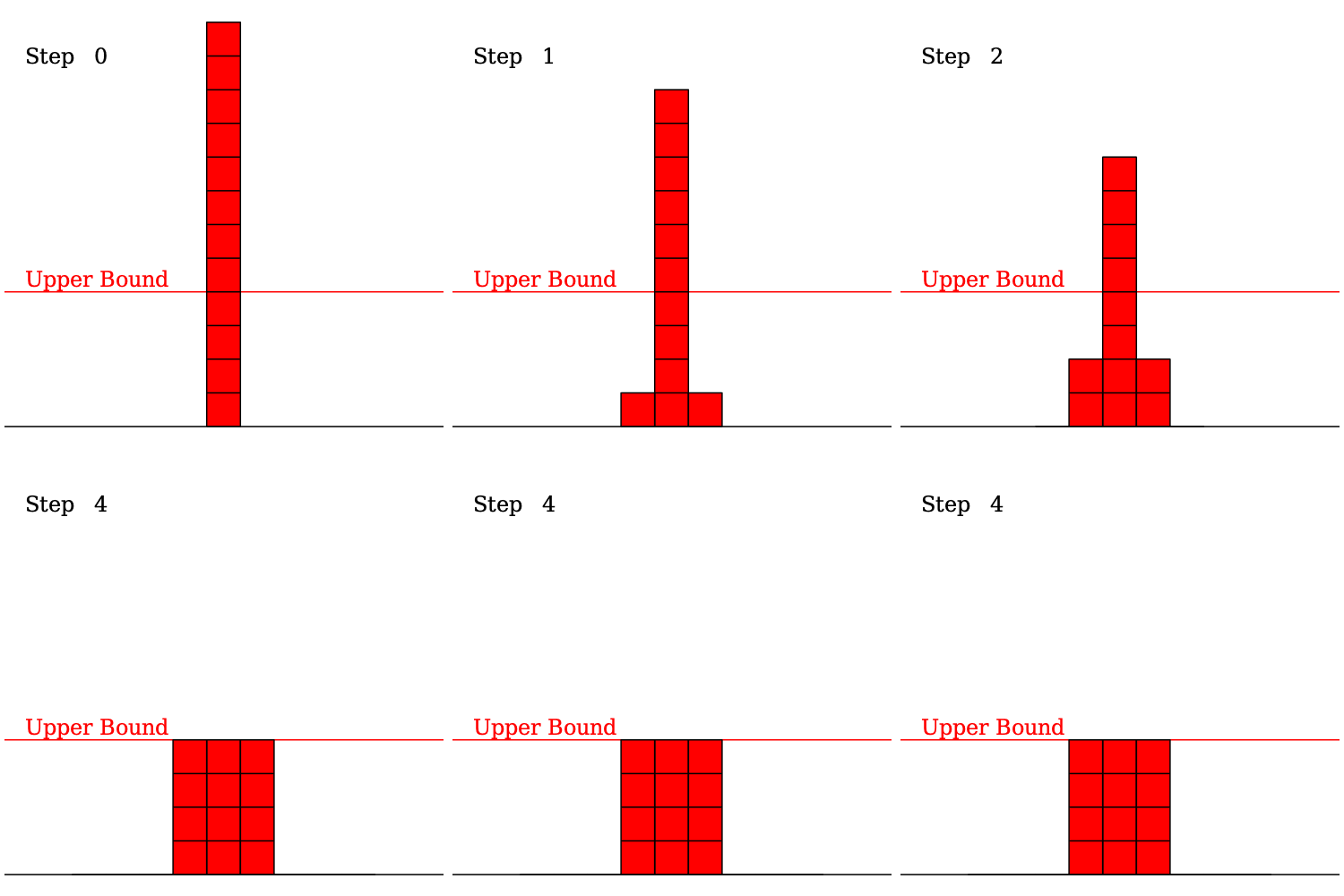
Fig.
5: Starting Height 12
4.2 Starting Height 24
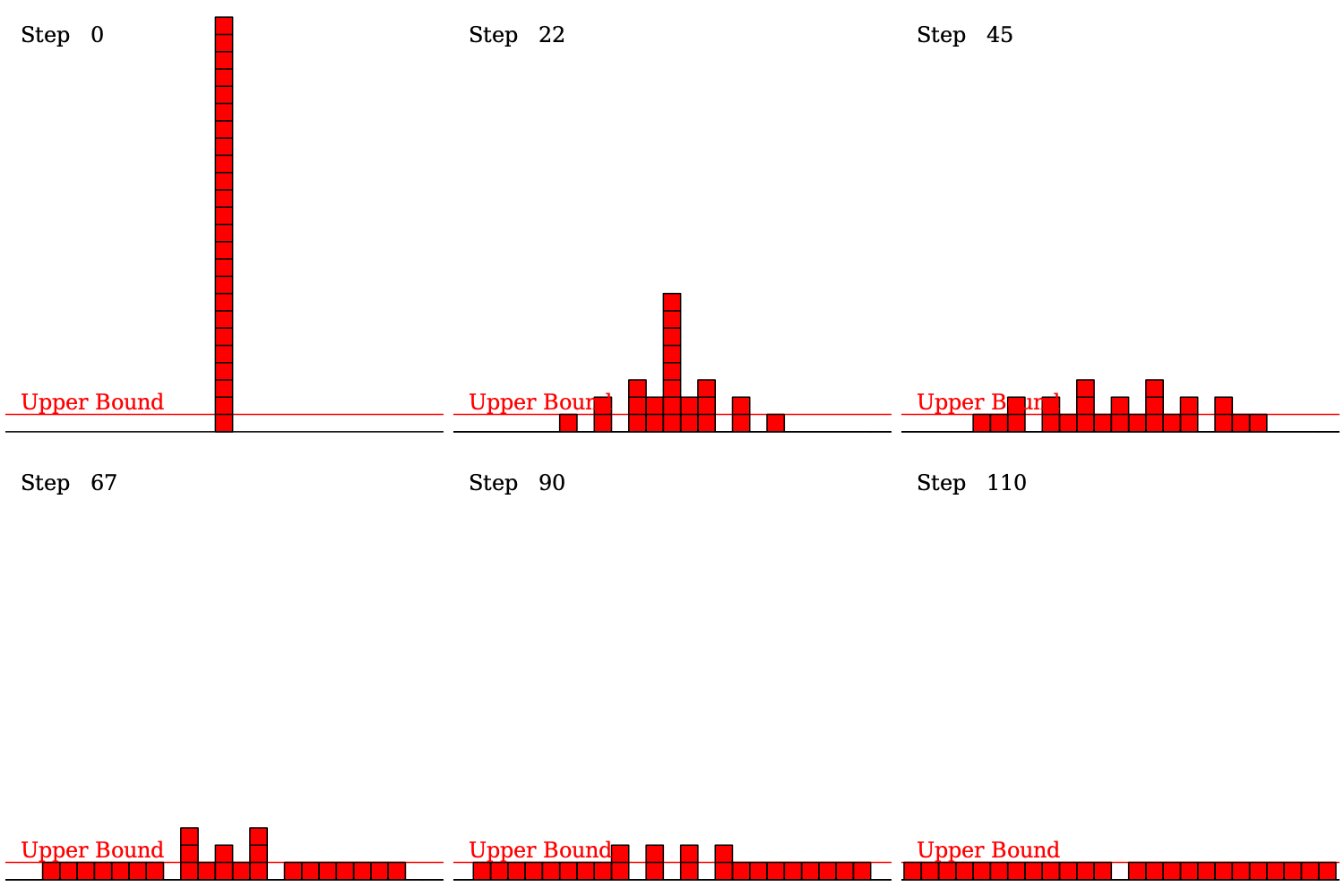
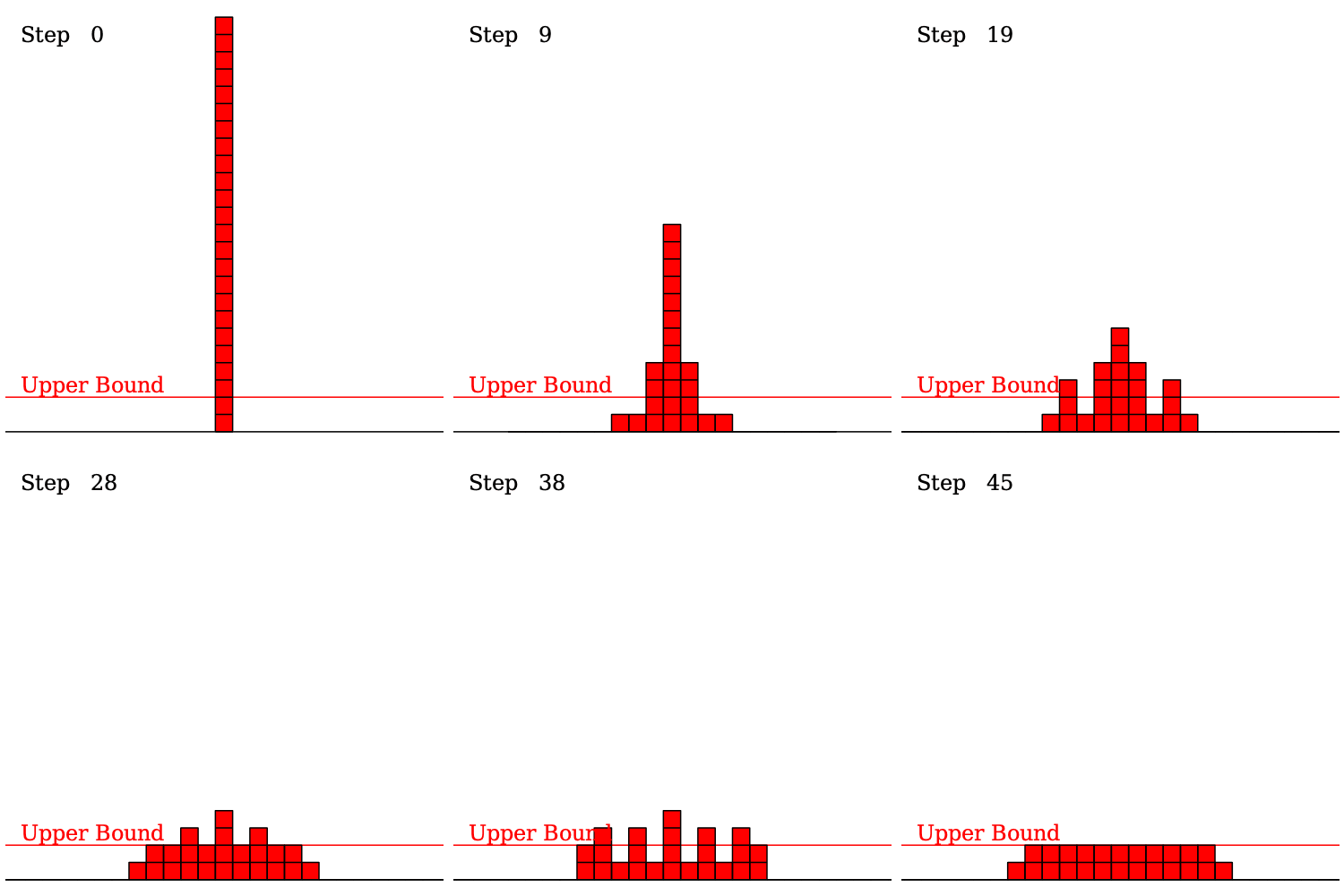
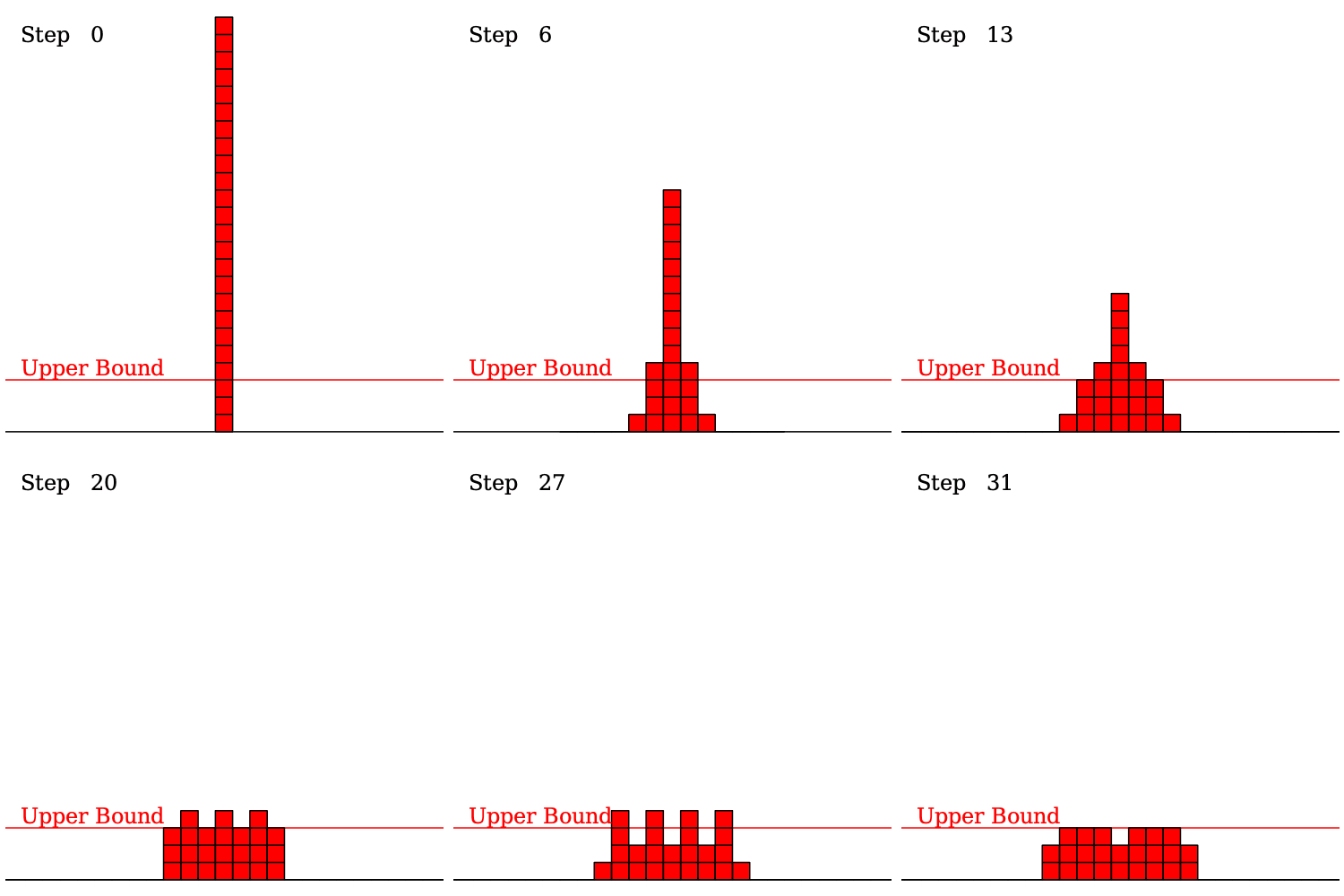
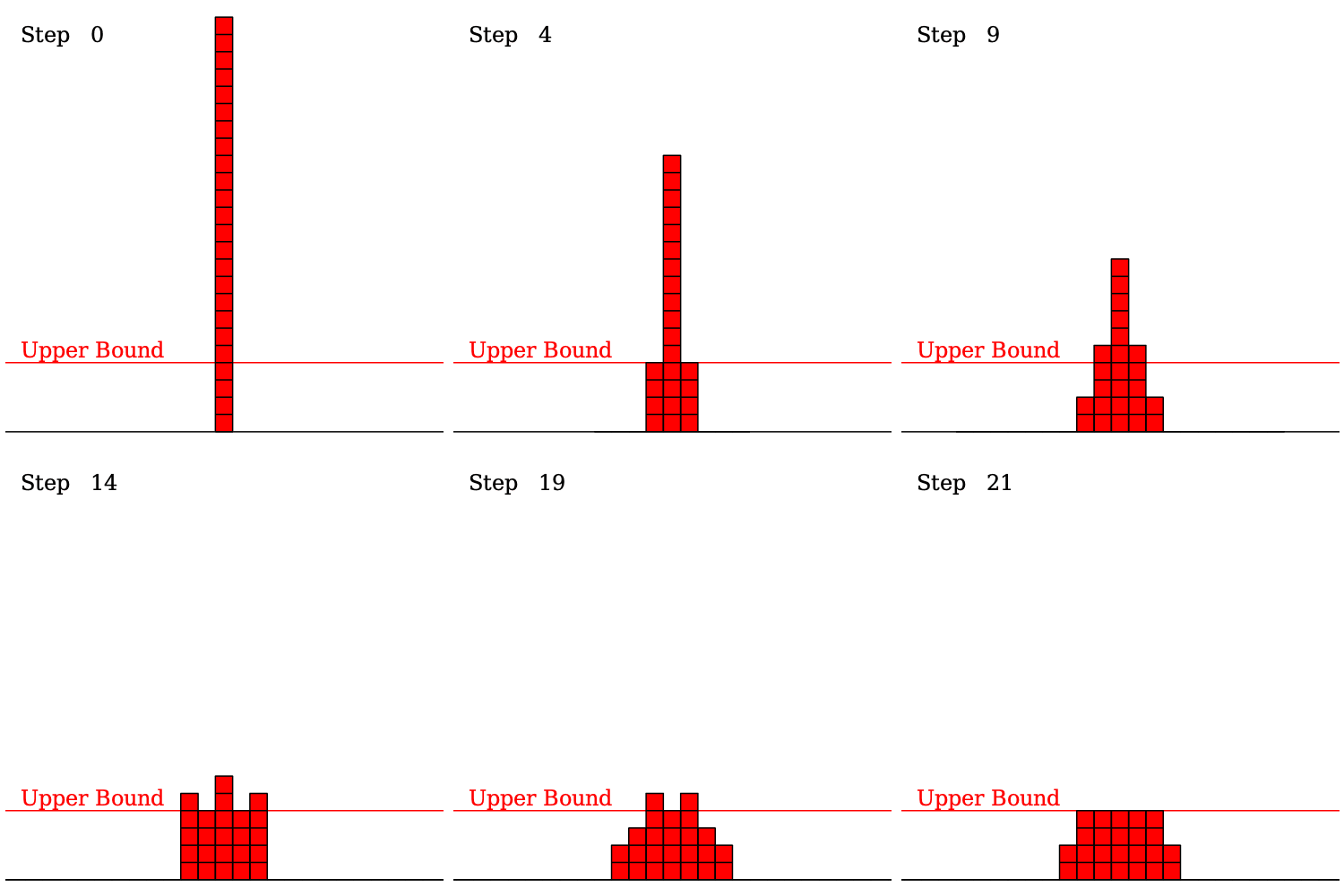
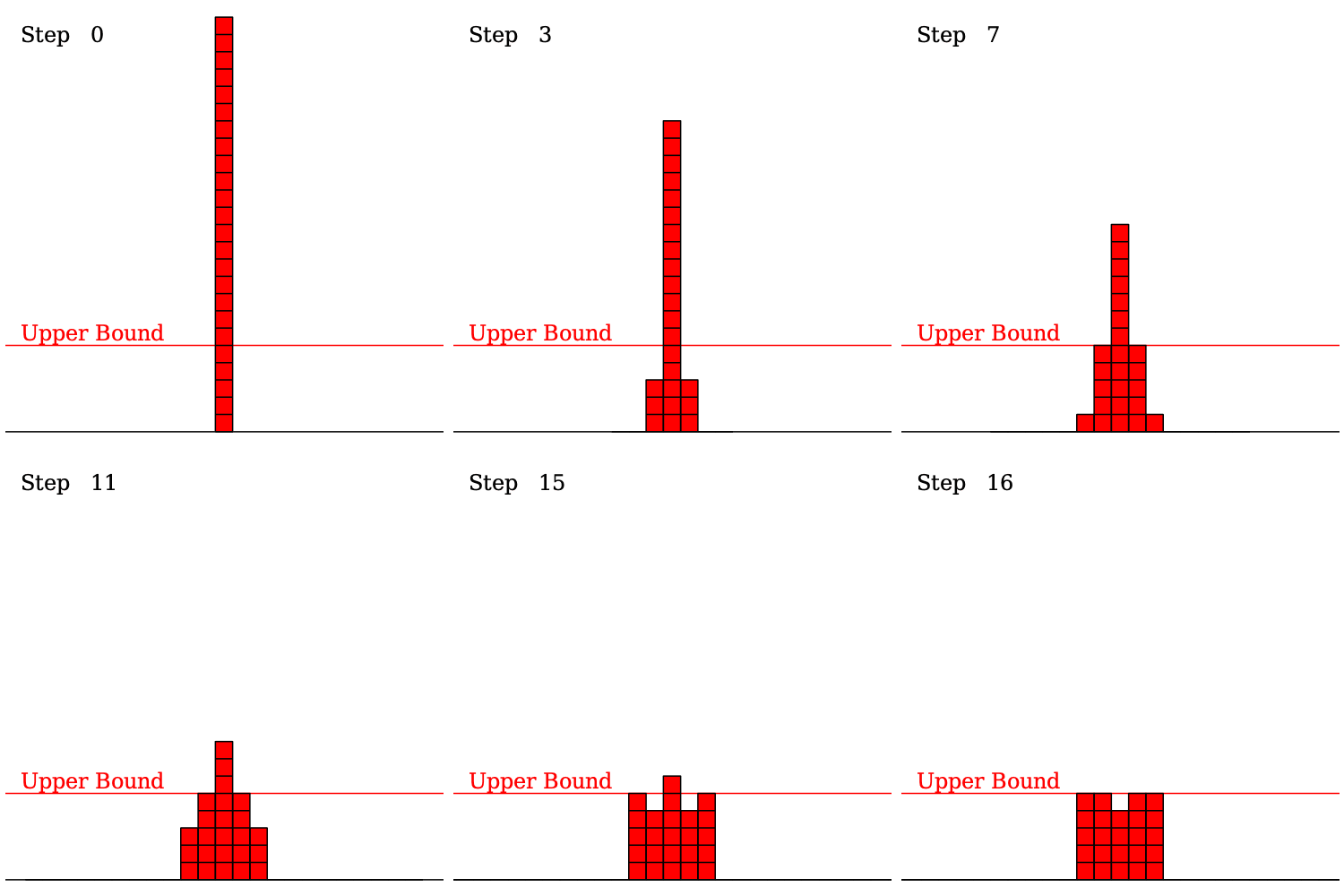
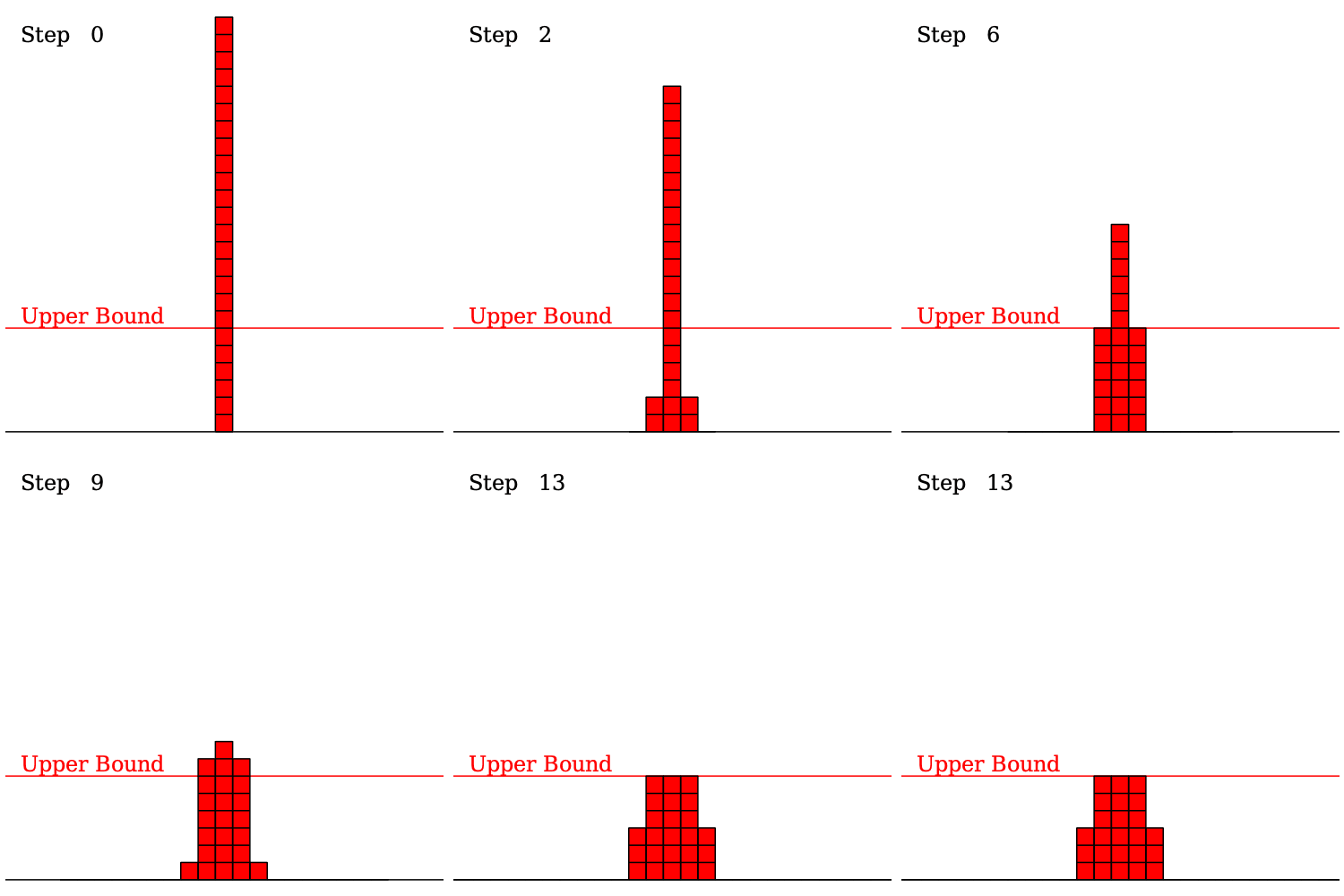
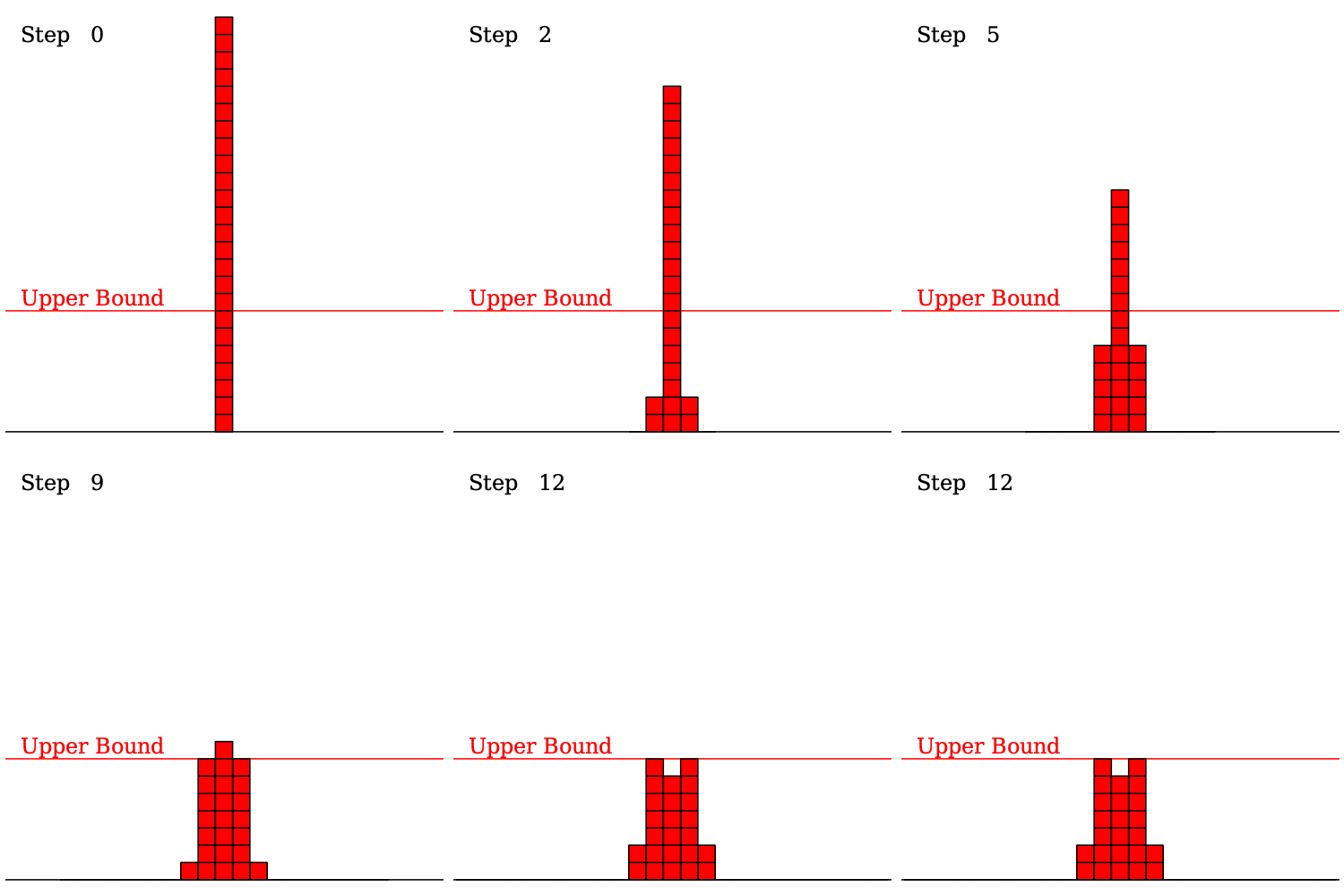
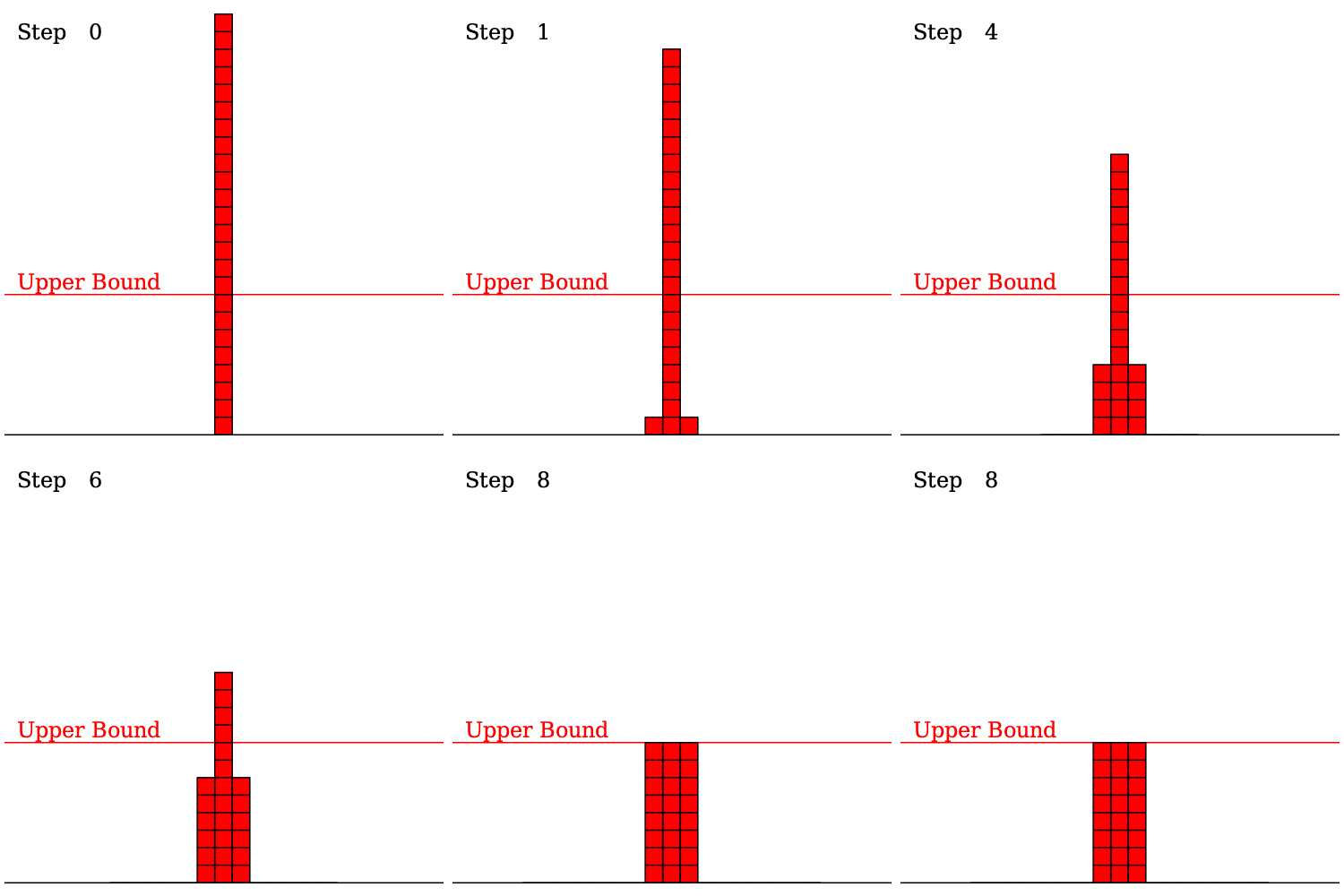
Fig.
6: Starting Height 24
5
Number
of Steps
Table 1
shows the number of steps required depending on the starting height n
and the upper bound s.
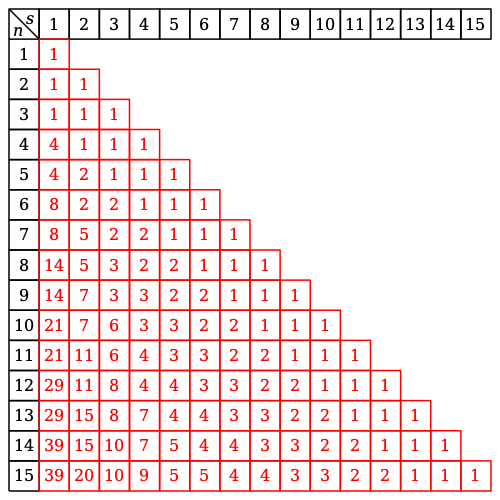
Table
1: Number of Steps
The
column for s = 1 can be found here.
The table
is only interesting for upper bounds that are less than one-third of the
starting height. For larger upper bounds, only the central starting stack is reduced
(Fig. 7 for n = 15 and s = 5).
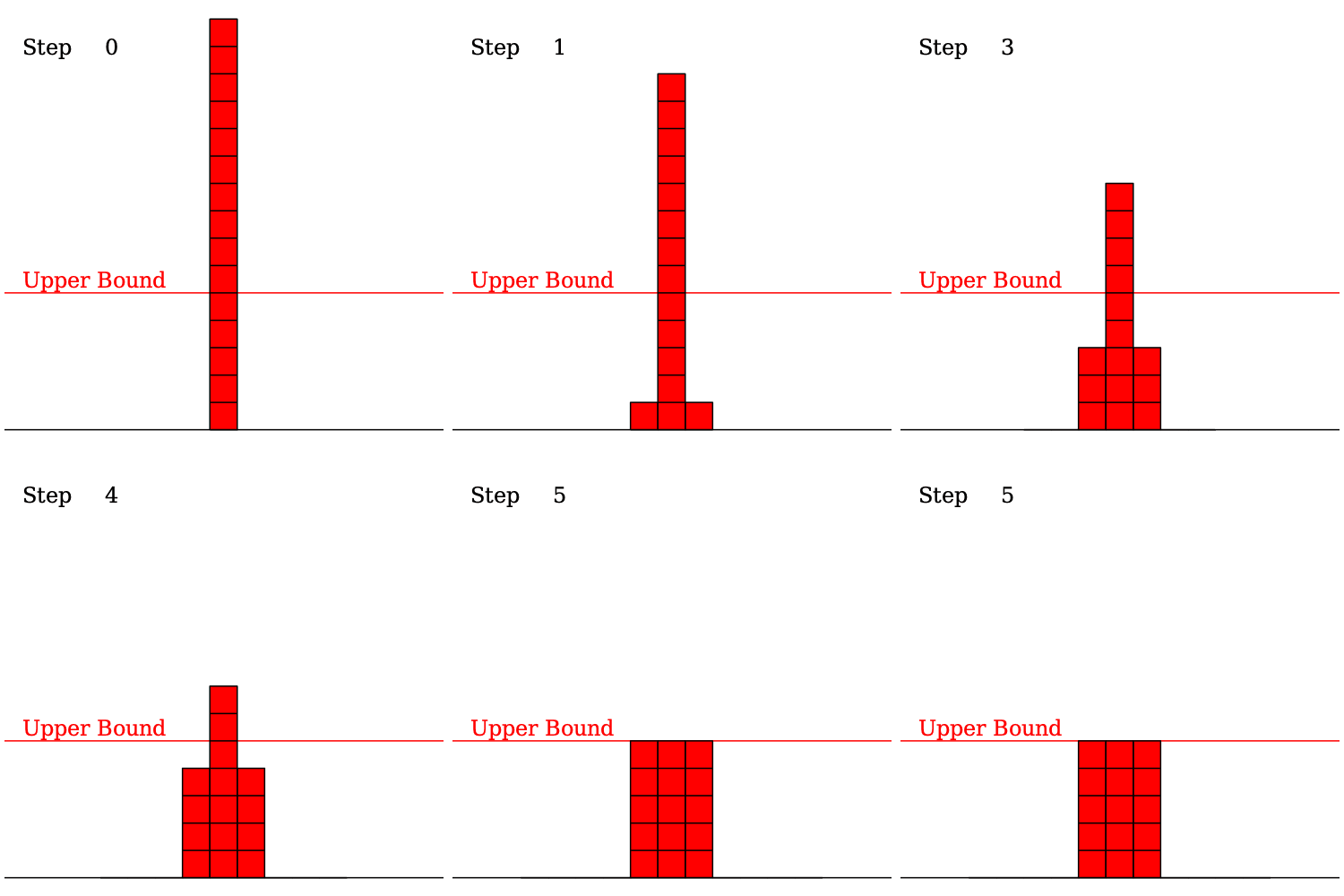
Fig.
7: Reducing the Starting Stack
Weblinks
The
On-Line Encyclopedia of Integer Sequences (OEIS)
Literatur
Labs, Oliver, und Skrodzki,
Martin (2026): Abelian Sandpiles. Mitteilungen der
deutschen Mathematiker-Vereinigung, dmvm-2026-0031, S. 132.DOI 10.1515