Hans
Walser, [20260630]
Closing
Figure with Polygons
1
Procedure
Starting
at a vertex, we successively construct congruent regular polygons with n
vertices until a polygon touches the starting polygon.
2
Examples
2.1 Equilateral Triangles
With
equilateral triangles, we reach the closing figure (Fig. 1) after six steps. We
denote the number of steps to the closing figure by m.


Fig.
1: Equilateral Triangles
During
the closing process, we go around the center once. The number of turns is 1.
The number of turns is best counted by connecting the centers of consecutive
polygons. This creates a star with m points.
2.2 Squares
With
squares, we reach the closing figure (Fig. 2) after only four steps. The number
of turns is 1.

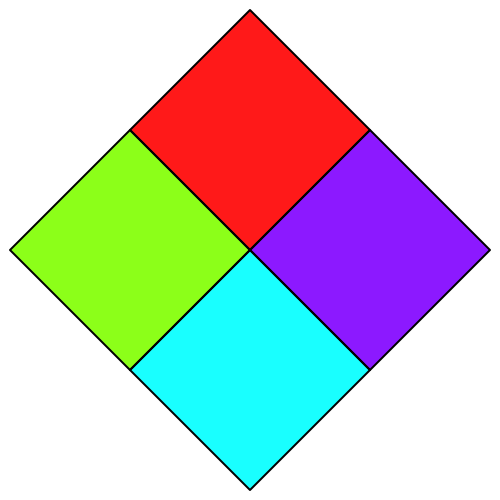


Fig.
2: Squares
2.3 Pentagons
Regular
pentagons have overlaps. Therefore, the color transparent had to be chosen
(Fig. 3). We need ten pentagons to reach the closing figure. The number of
turns is 3.

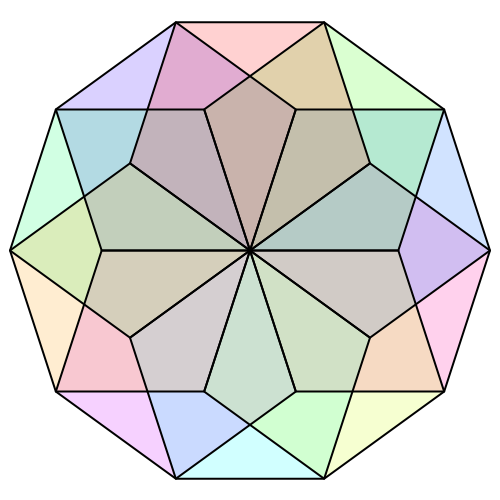

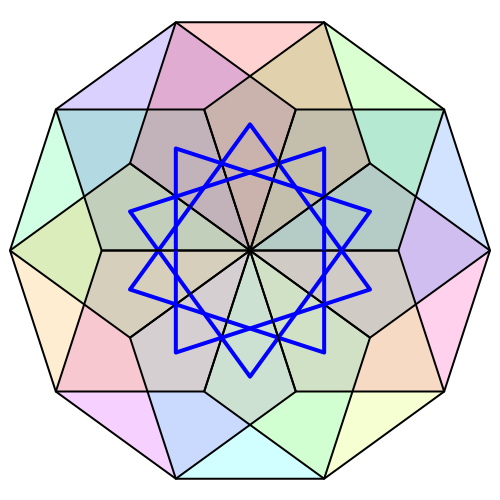
Fig.
3: Pentagons
The
two-dimensional figure (Fig. 3) can be interpreted as a top view of the rhombic
icosahedron (Fig. 4).
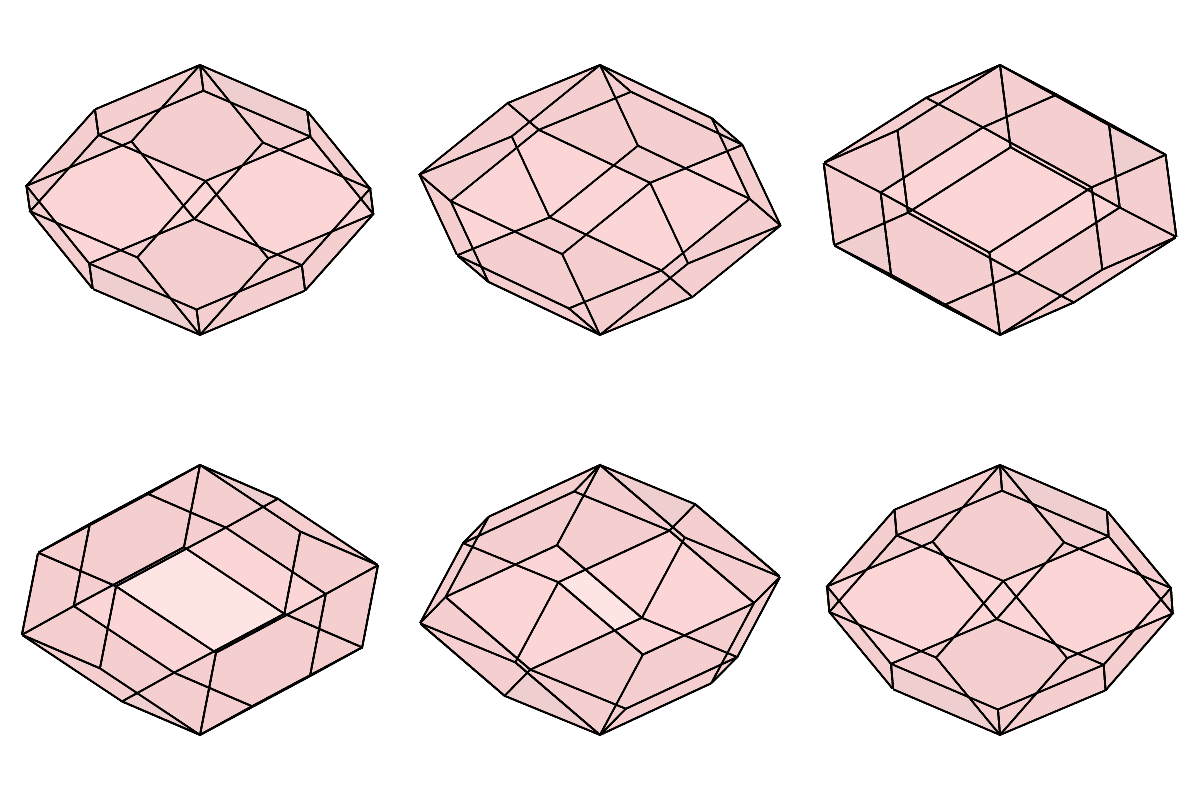

Fig.
4: Rhombic icosahedron. Top view
Similarly,
the two-dimensional figure (Fig. 3) can be interpreted as a top view of the
rhombic triacontahedron (Fig. 5).
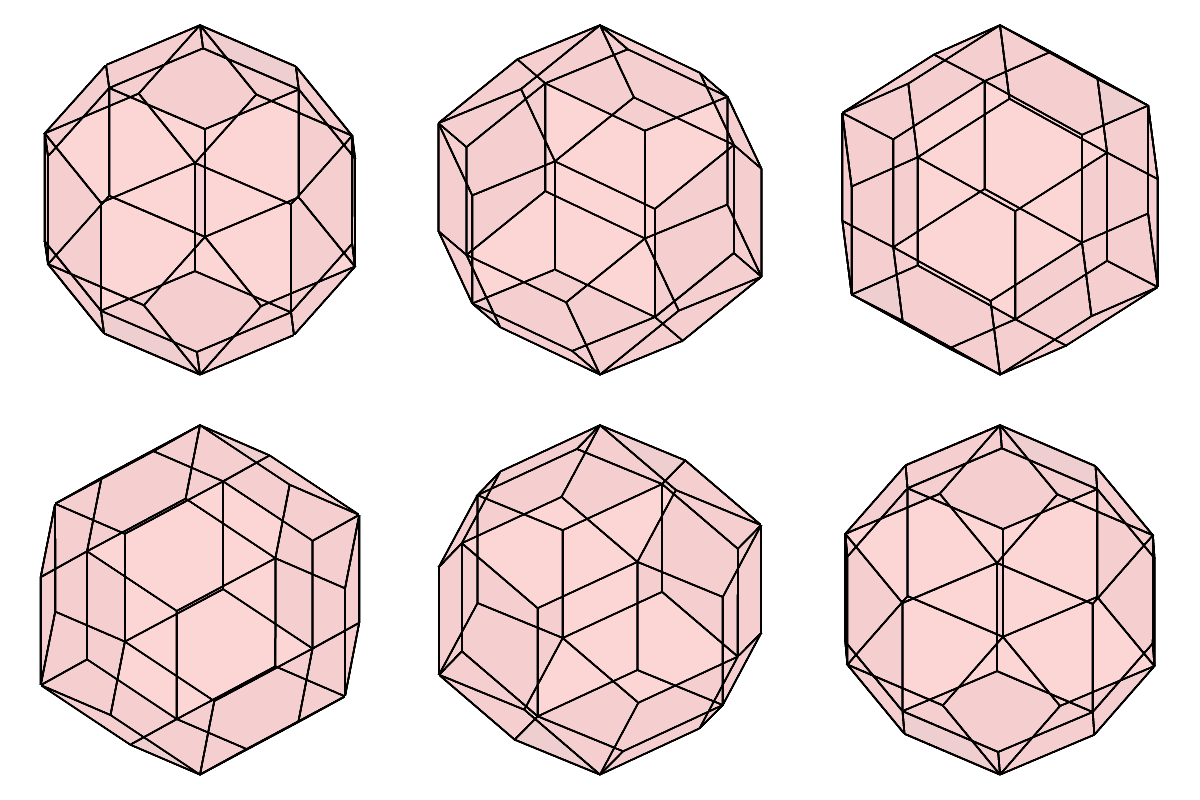
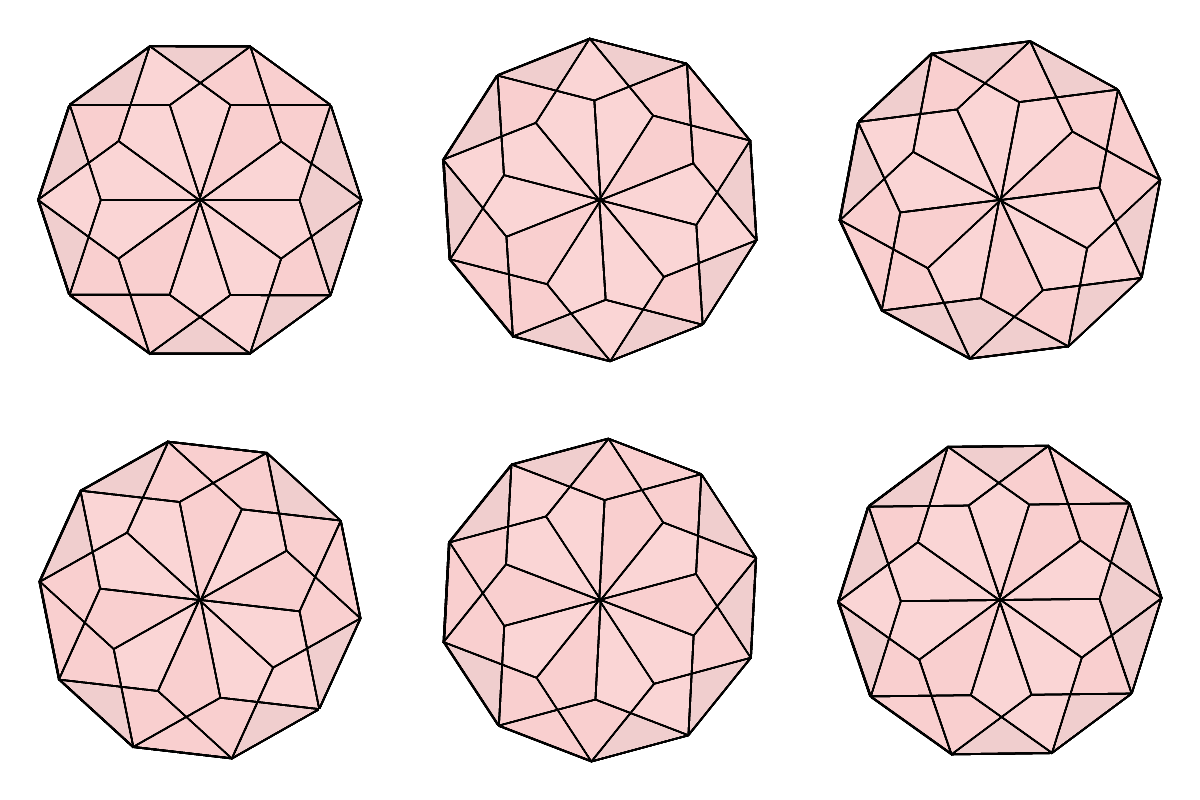
Fig.
5: Rhombbic triacontahedron. Top view
2.4 Hexagons
With
regular hexagons, we even reach the closing figure (Fig. 6) in three steps.
There are no overlaps. The number of turns is 1.
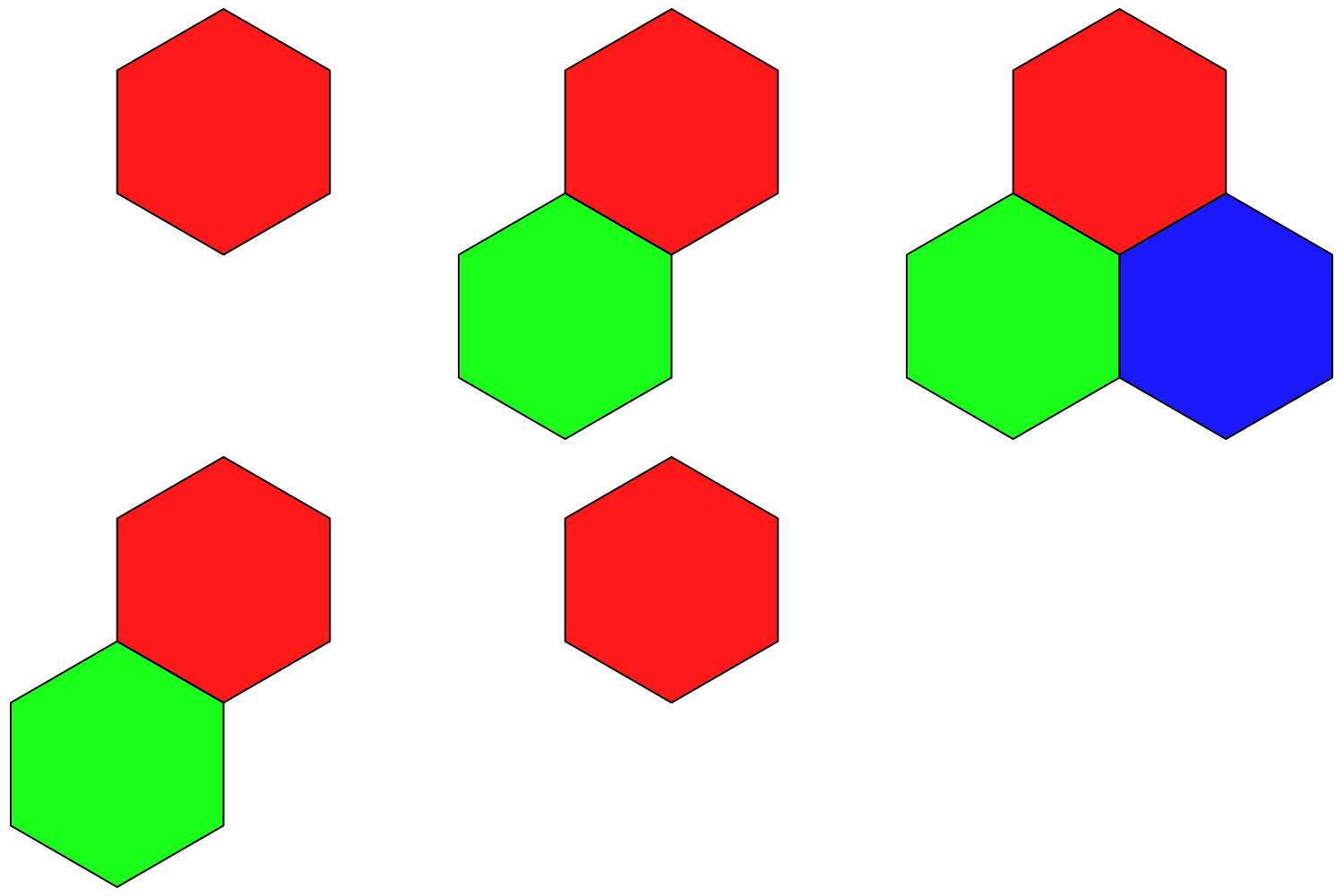

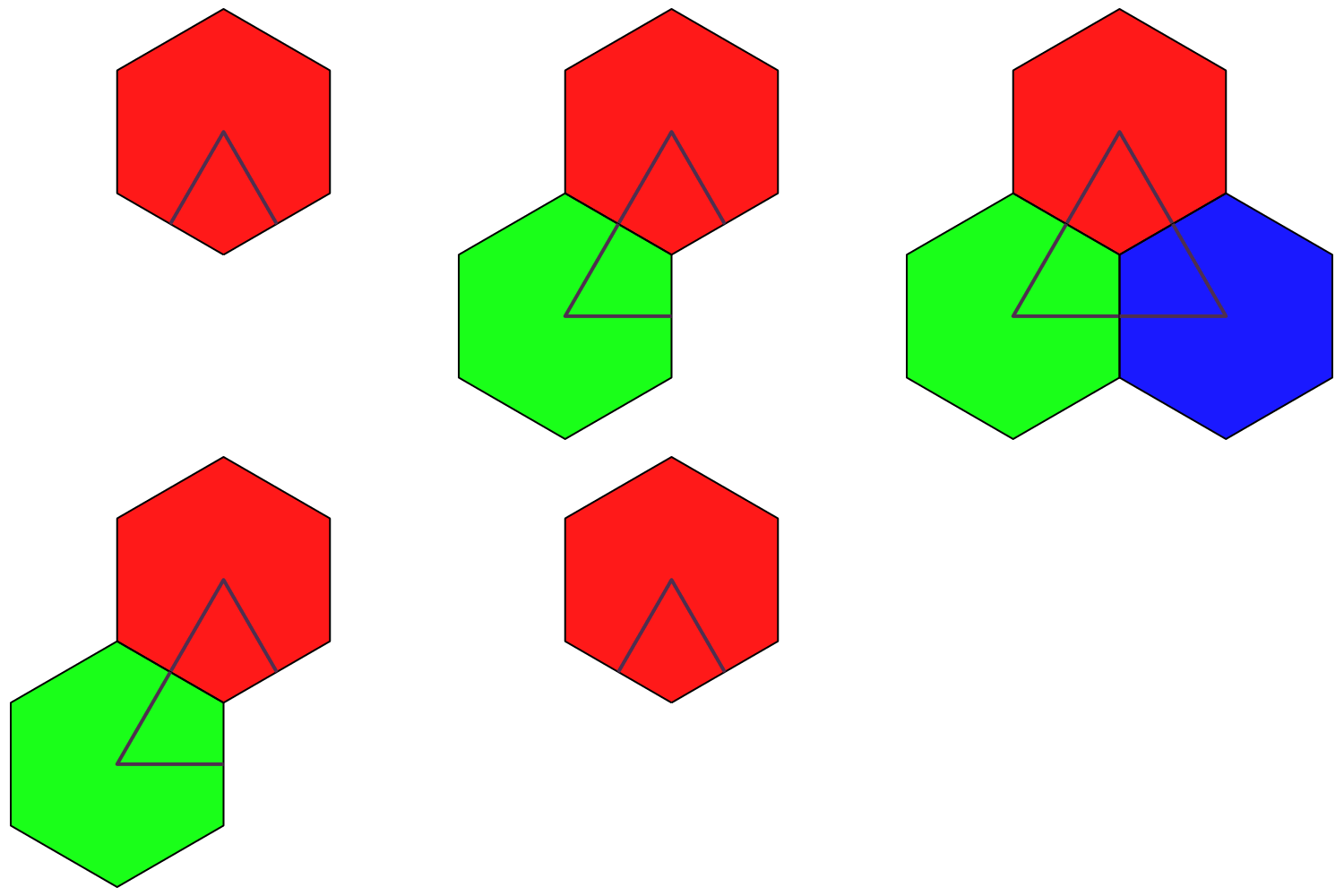
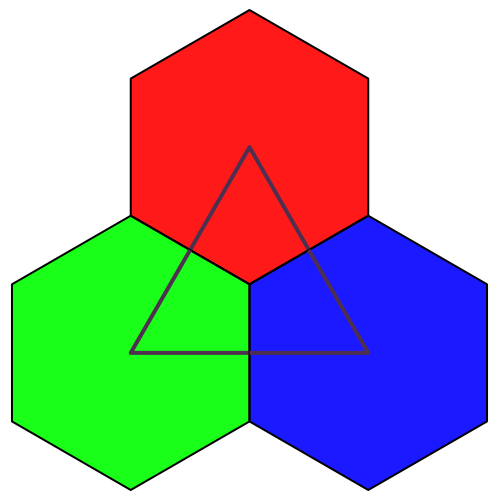
Fig.
6: Hexagons
2.5 Heptagons
With
regular heptagons, overlaps occur again. We need m = 14 heptagons to
reach the closing figure (Fig. 7). The number of turns is 5.
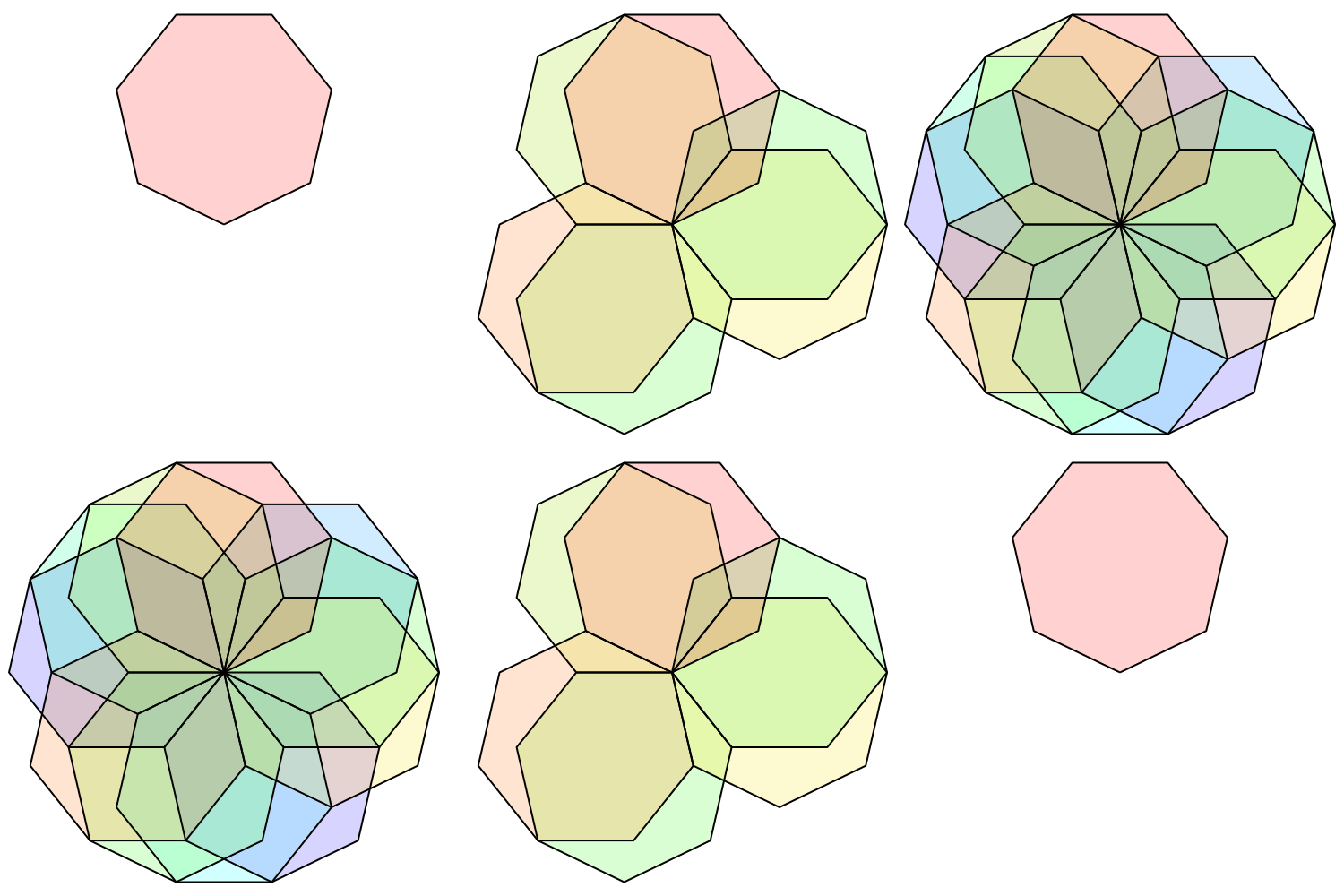


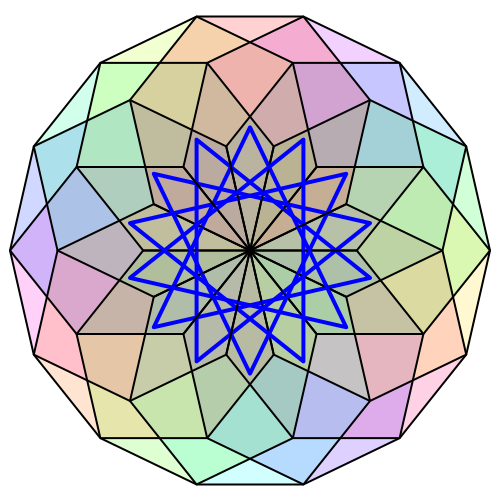
Fig.
7: Heptagons
2.6 Octagons
Regular
octagons require eight steps (Fig. 8). The number of turns is 3.
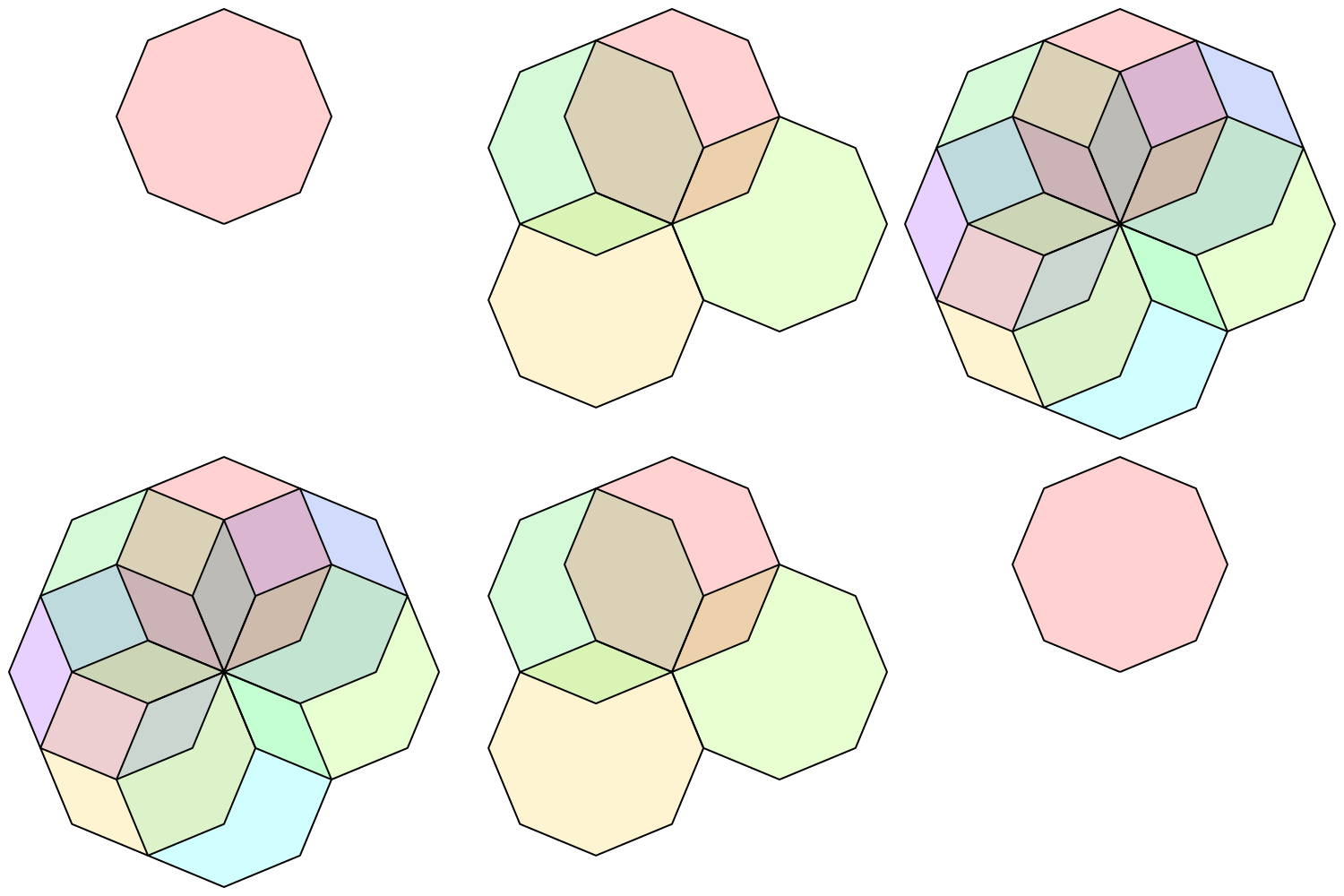
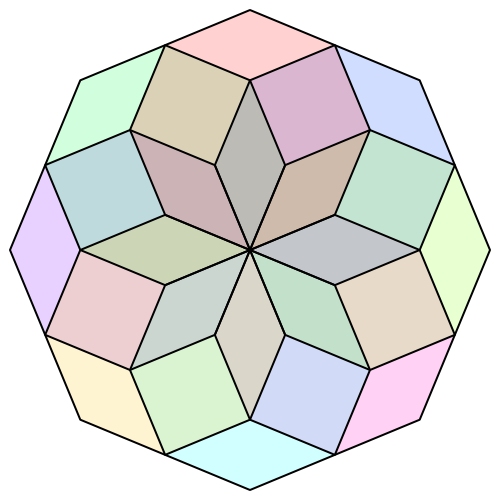
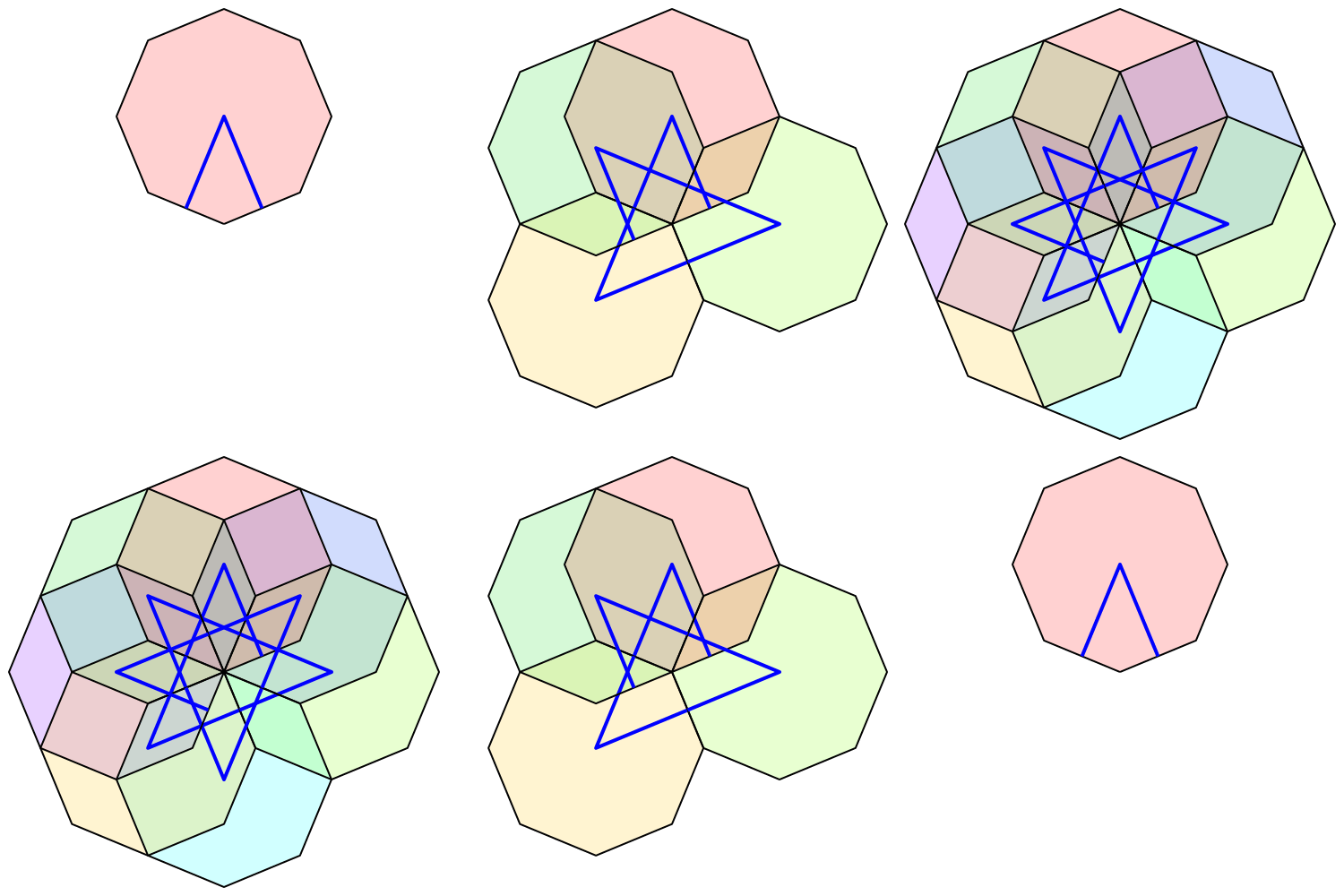
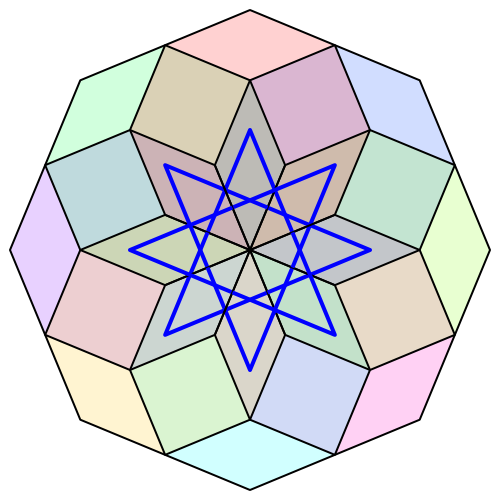
Fig.
8: Octagons
Planimetrically,
the closing figure consists of 24 rhombuses with equal edge lengths.
2.7 Nonagons
Regular
nonagons require m = 18 steps (Fig. 9). The number of turns is 7.
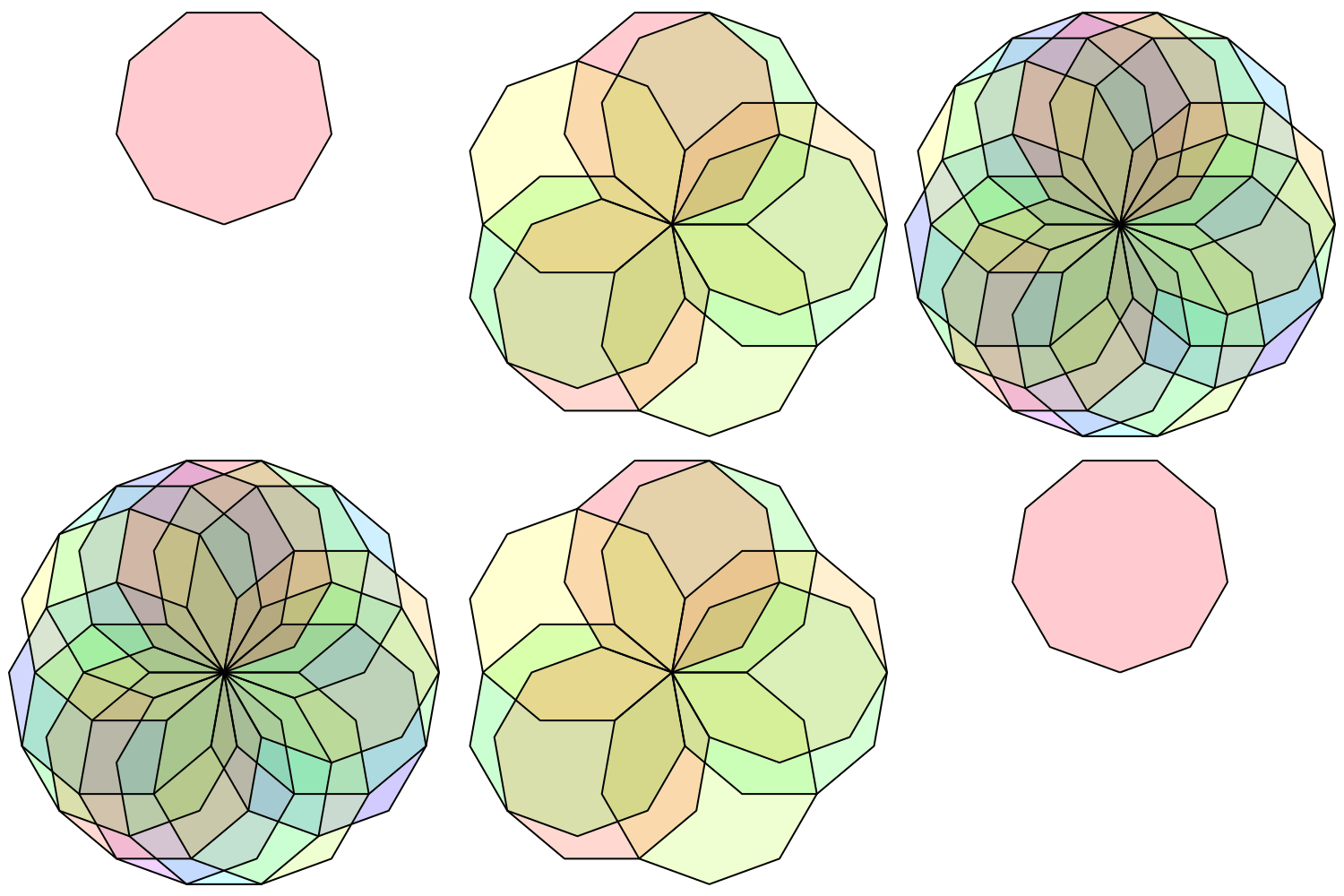
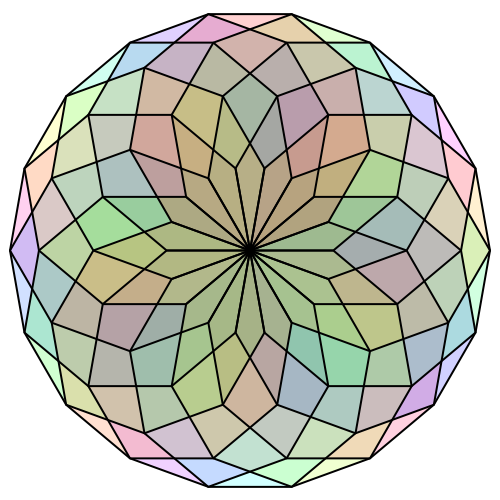
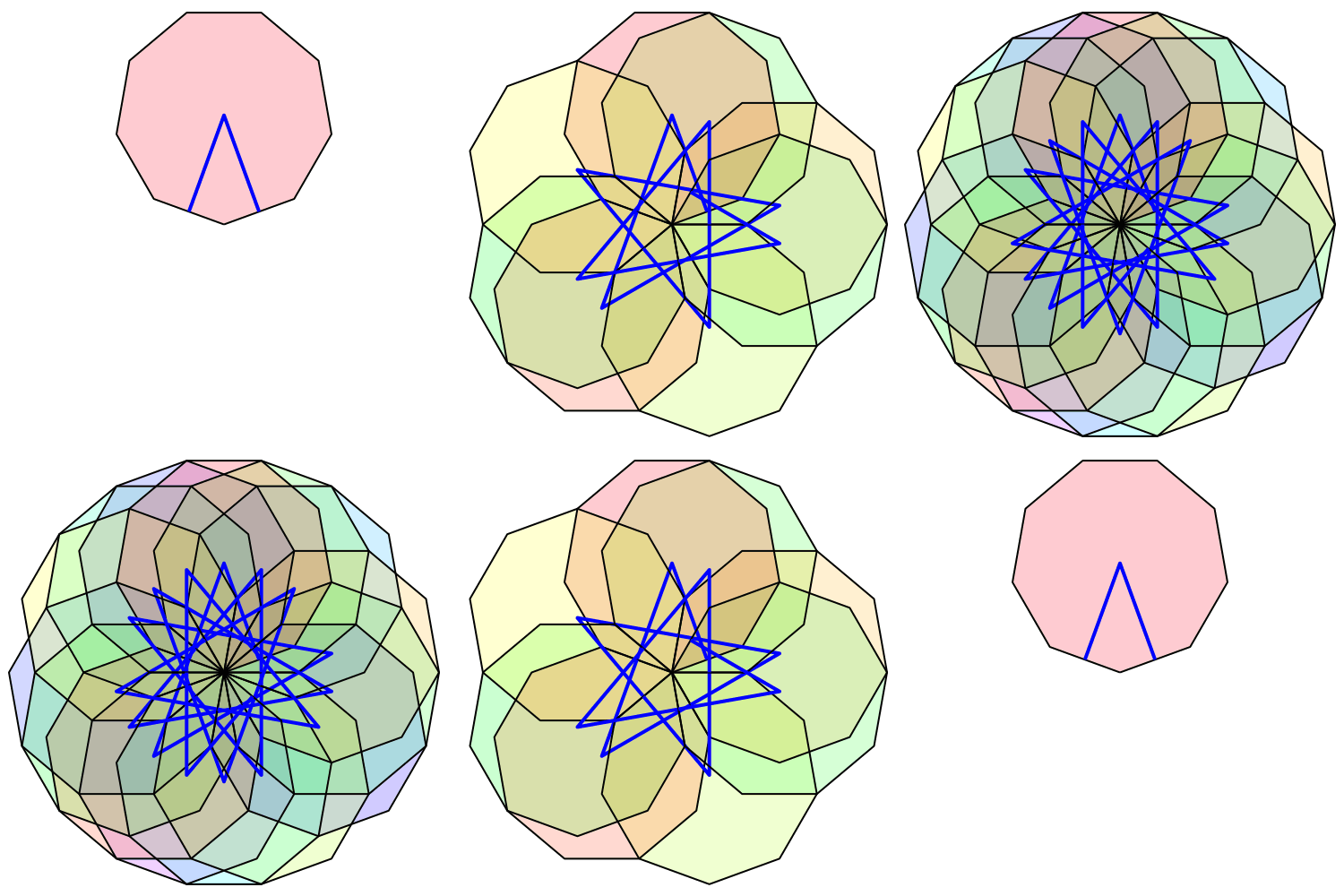

Fig.
9: Nonagons
2.8 Decagons
Regular
decagons require only five steps (Fig. 10). The number of turns is 2.

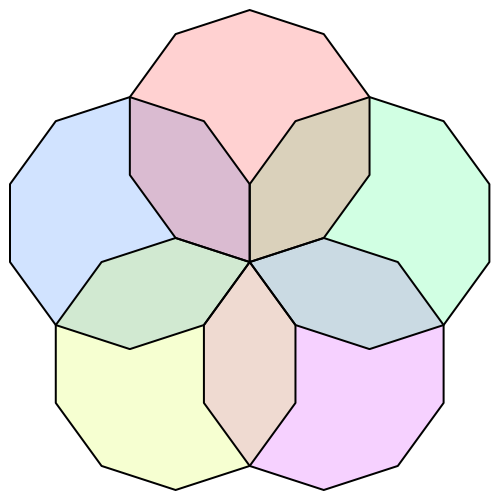
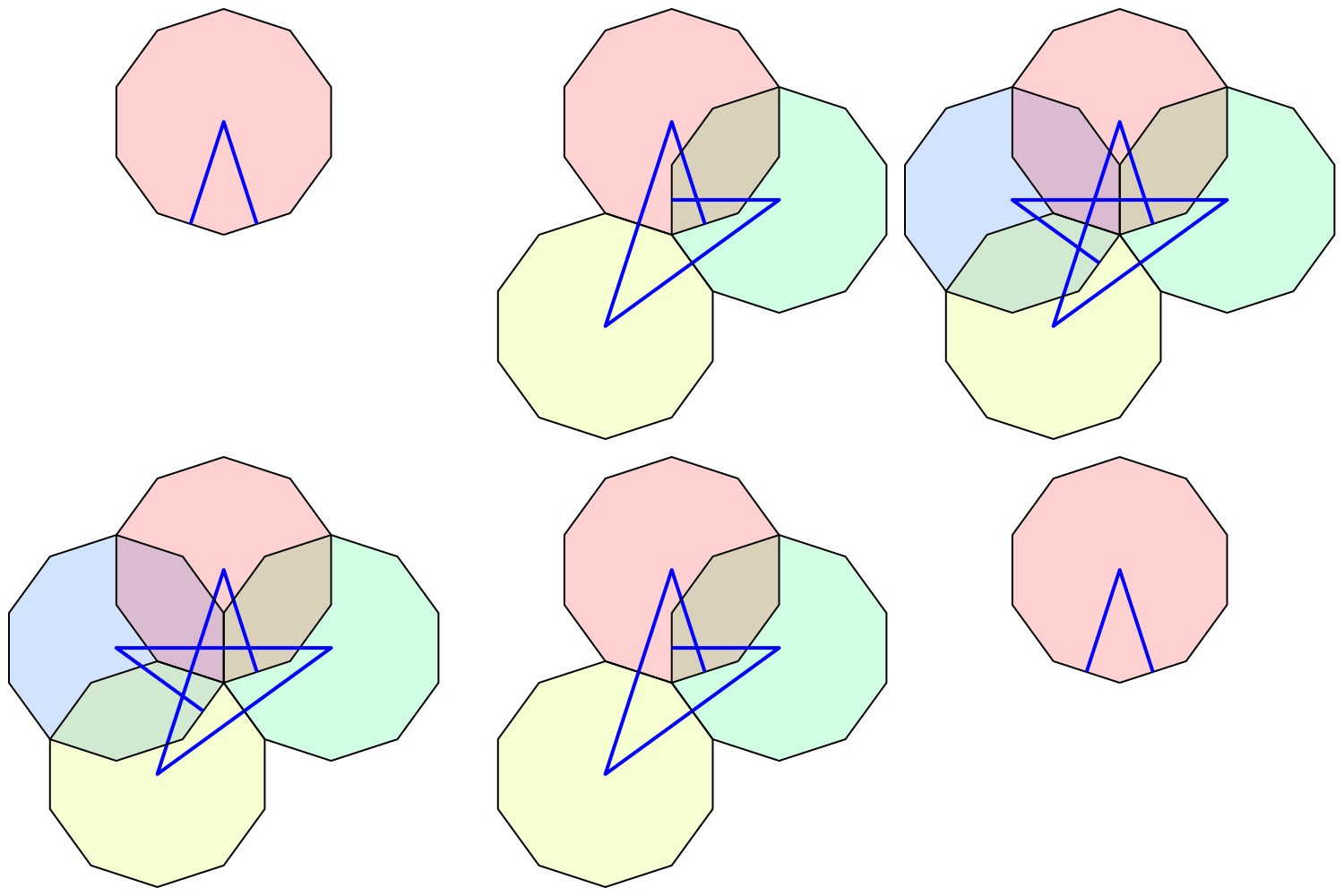

Fig.
10: Decagons
2.9 Eleven-gons
Regular
eleven-gonss require m = 22 steps (Fig. 11).
The number of turns is 9.
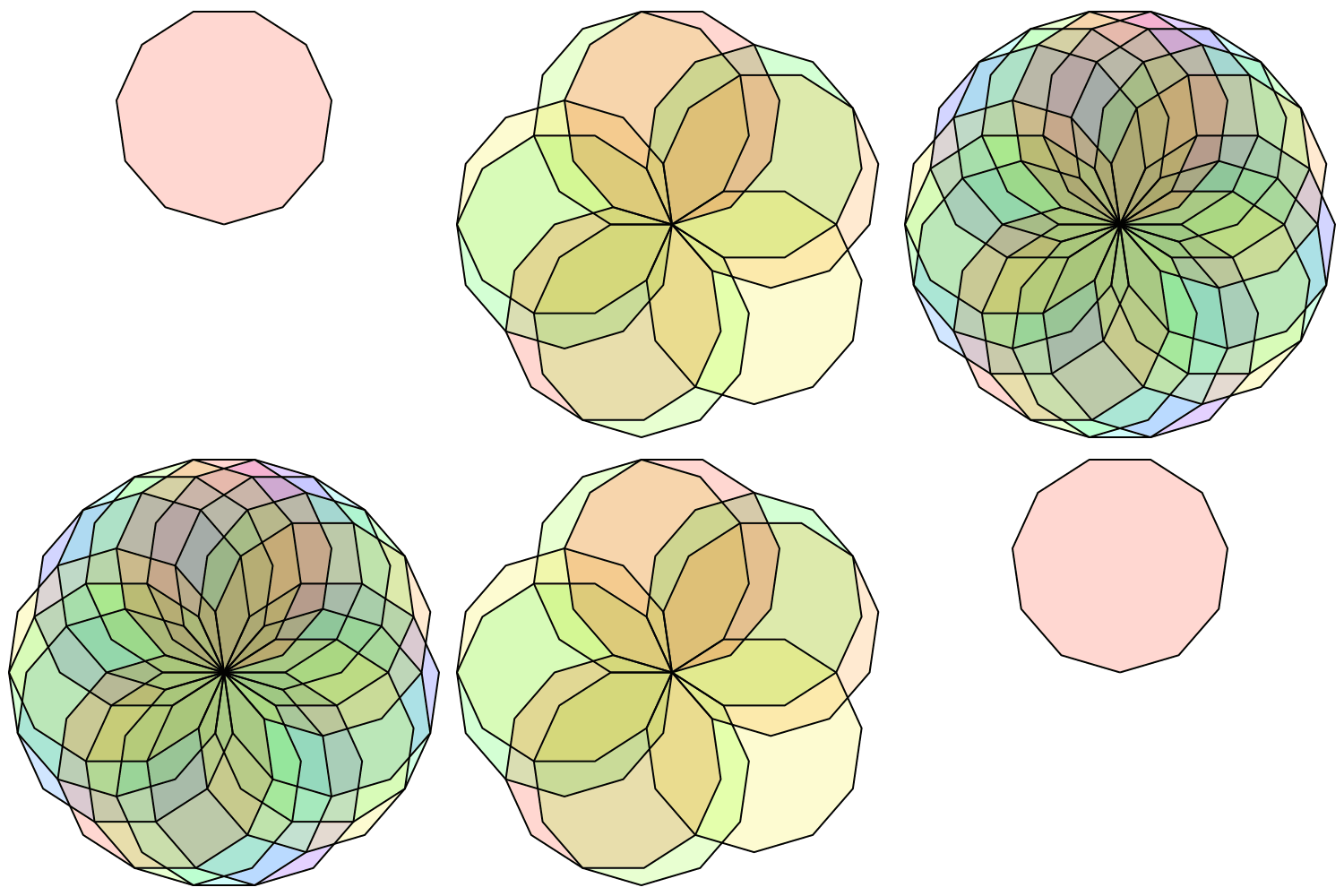
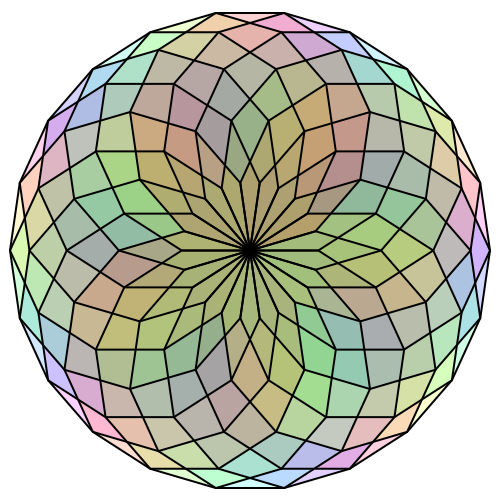
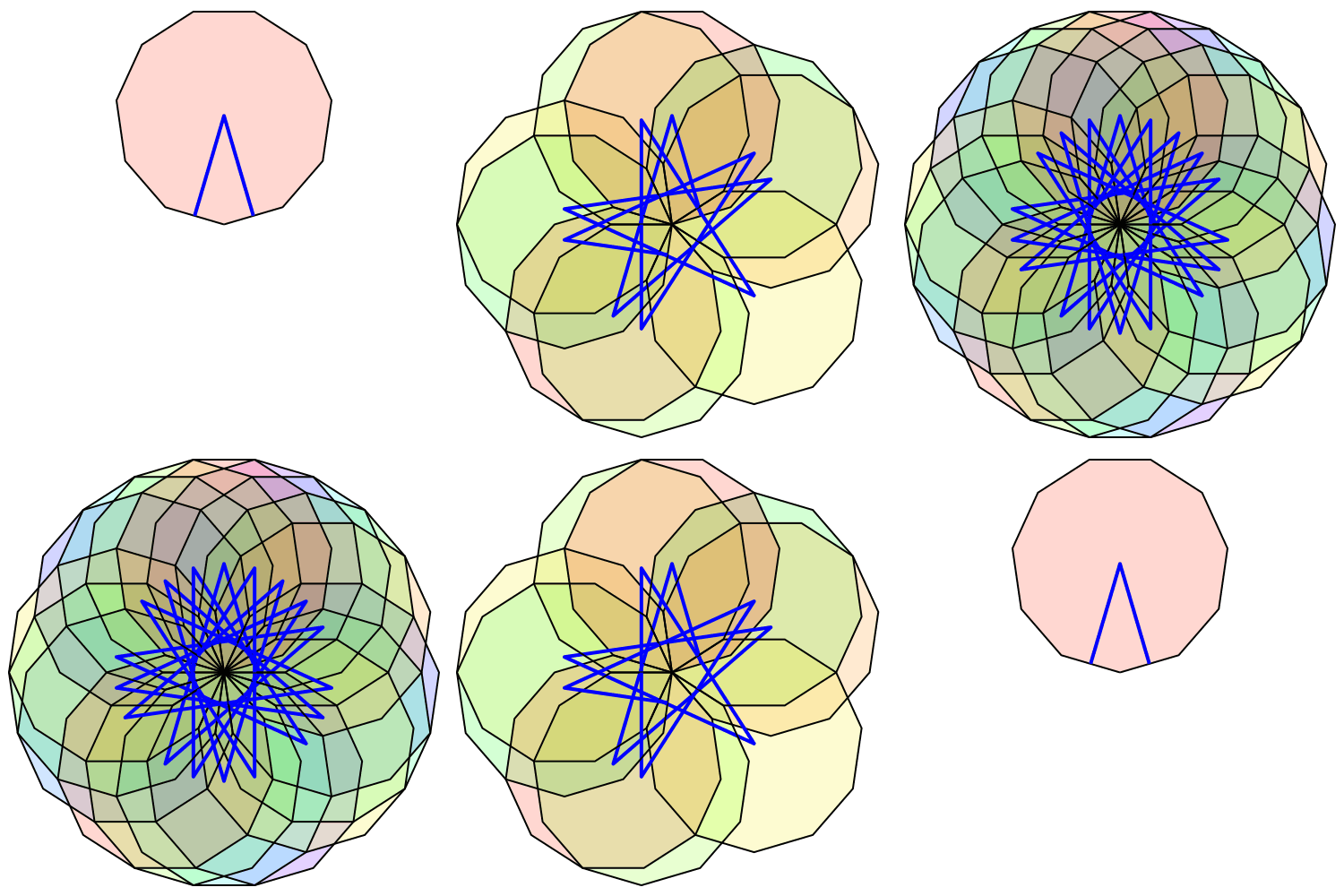
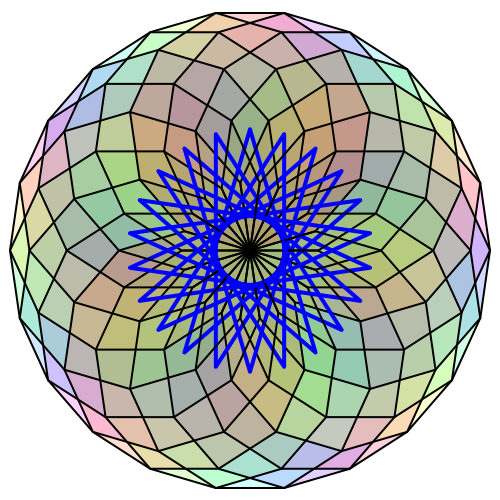
Fig. 11: Eleven-gons
2.10 Dodecagons
For
regular dodecagons, we need 12 steps (Fig. 12). The number of turns is 5.

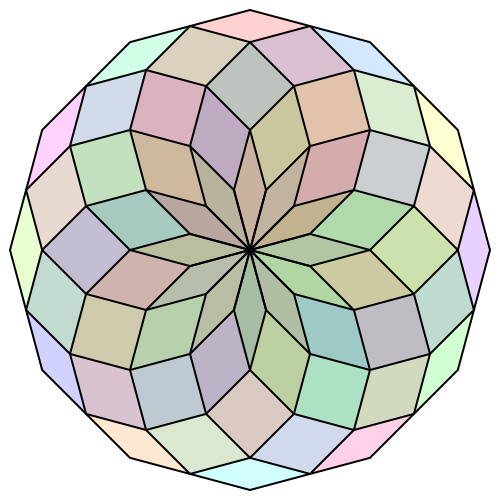
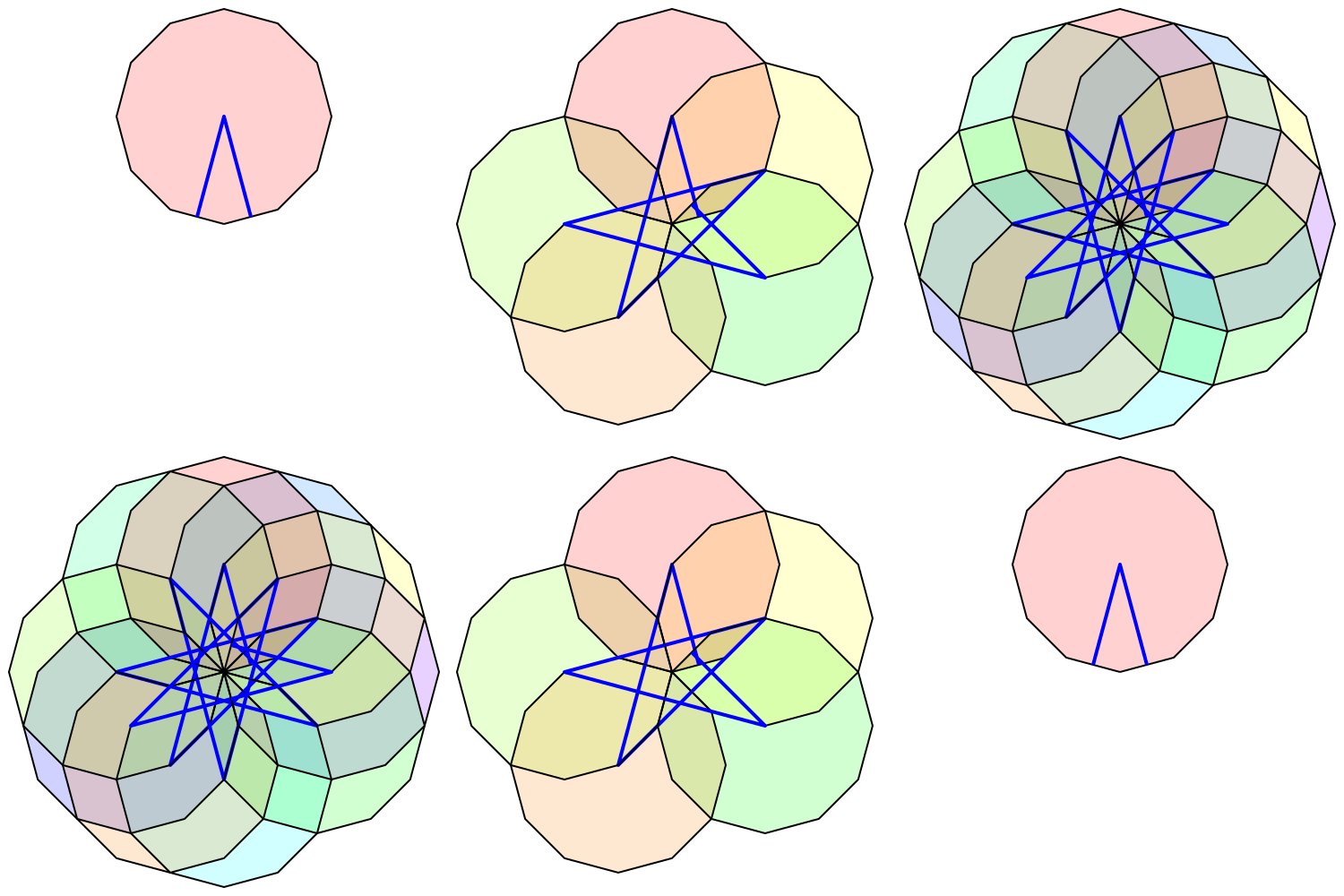

Fig.
12: Dodecagons
The
closing figure, viewed planimetrically, consists of 60 rhombuses with equal
edge lengths.
2.11 Thirteen-gons
For
regular thirteen-gons, we need 26 steps (Fig. 13).
The number of turns is 11.

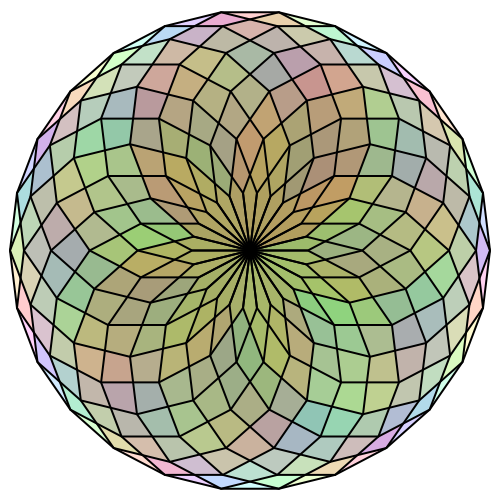
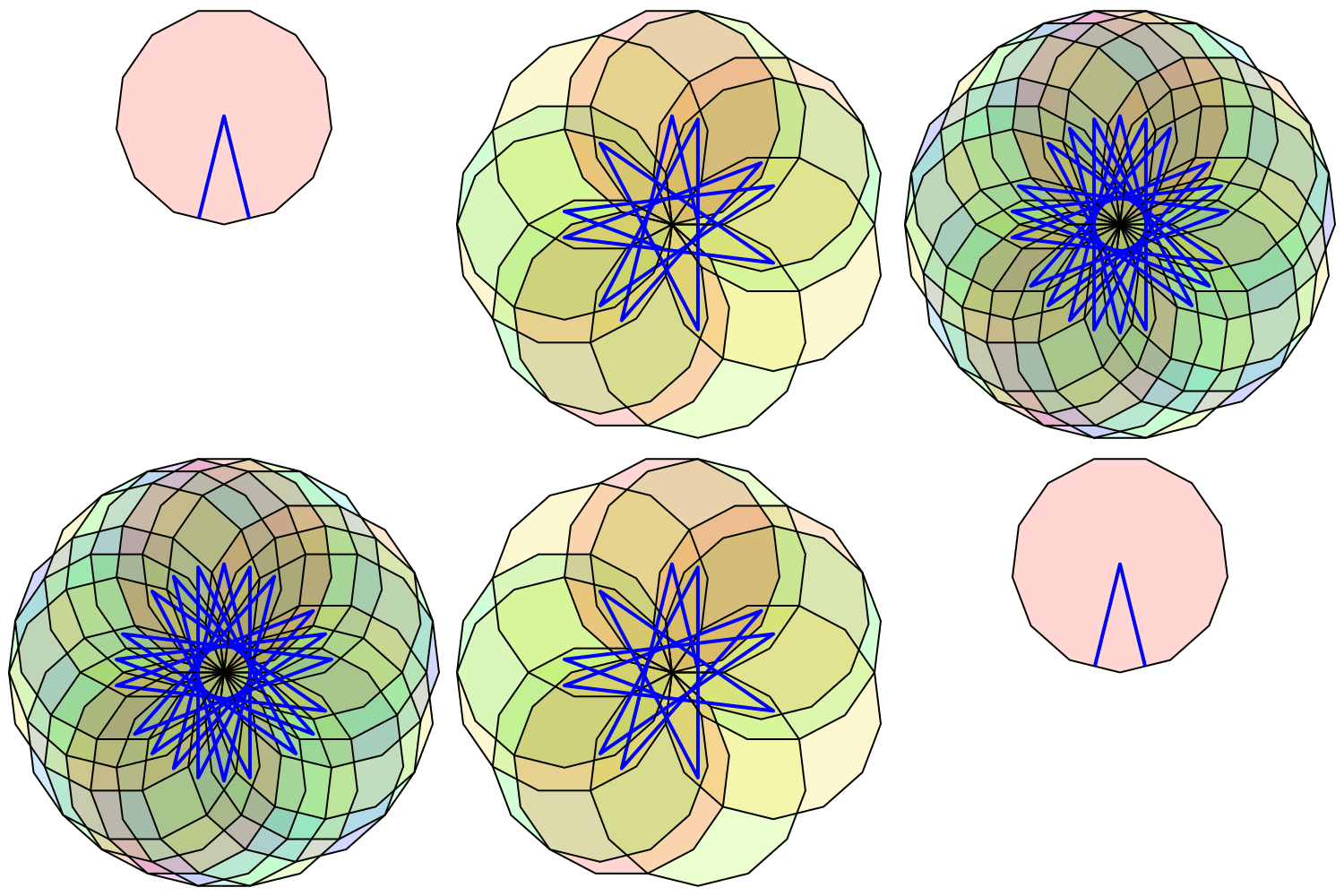

Fig.
13: Thirteen-gons
2.12 Fourteen-gons
For
regular foteen-gons, we only need 7 steps (Fig. 14).
The number of turns is 3.

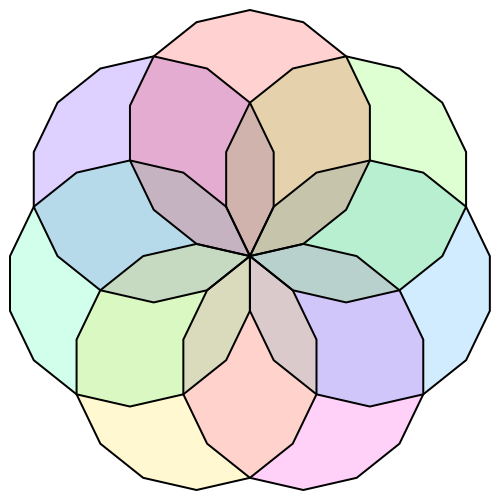


Fig.
14: Fourteen-gons
2.13 Fifteen-gons
For
regular fifteen-gons, we need 30 steps (Fig. 15). The
number of turns is 13.
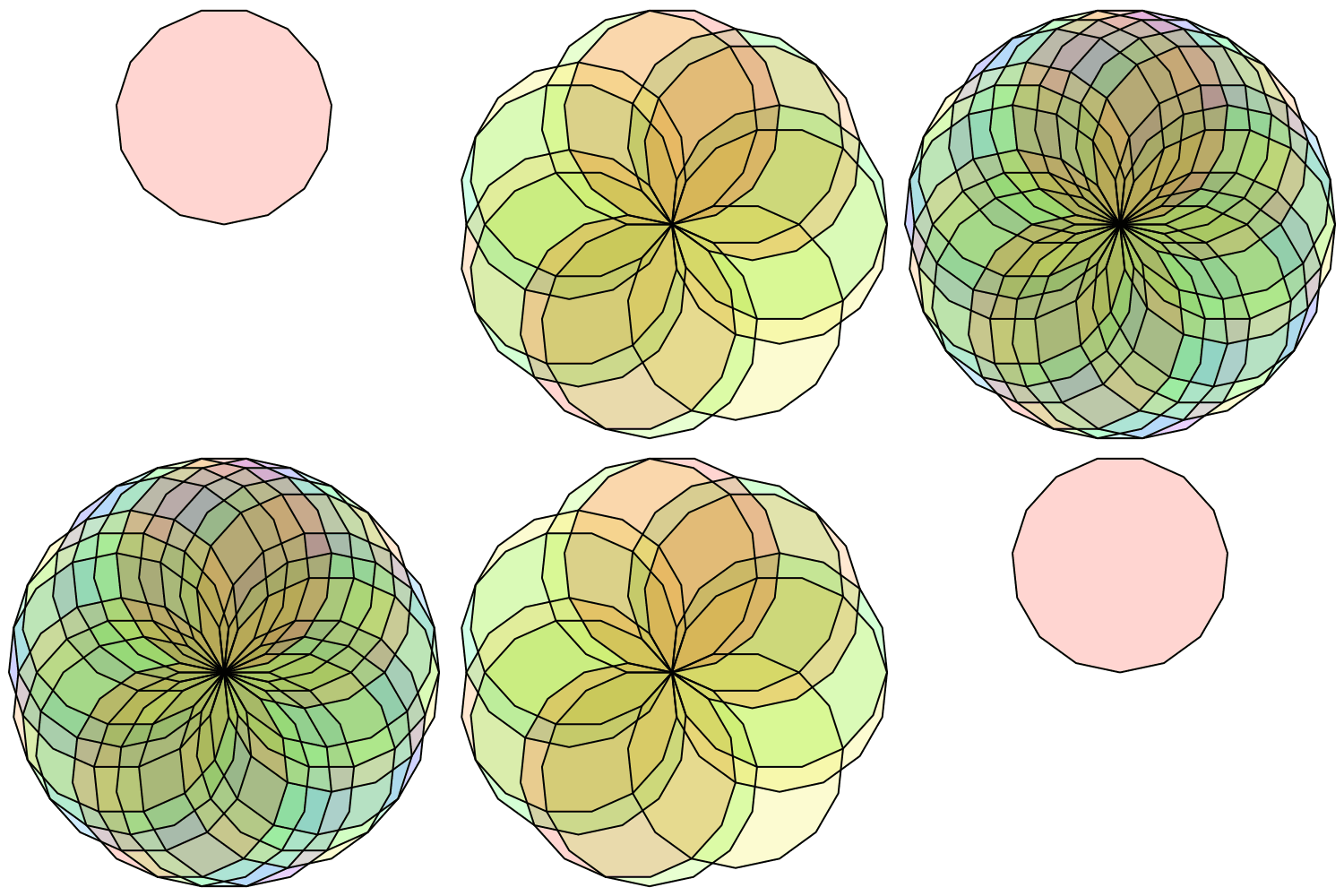
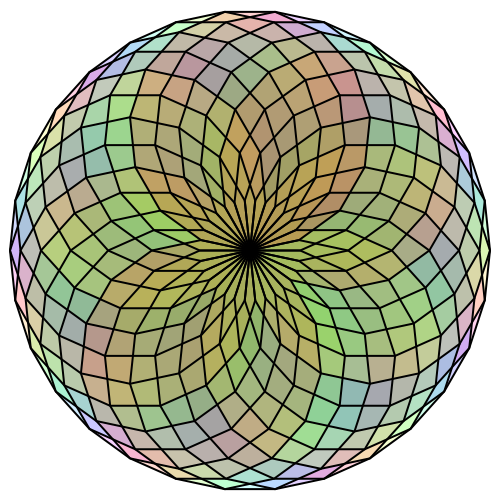

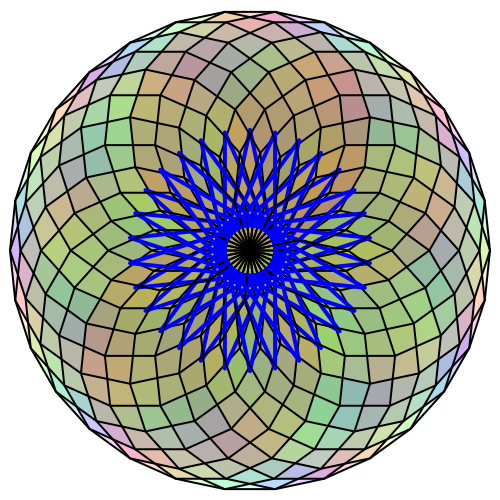
Fig.
15: 15-gons
2.14 16-gons
For regular
16-gons, we need 16 steps (Fig. 16). The number of turns is 7.
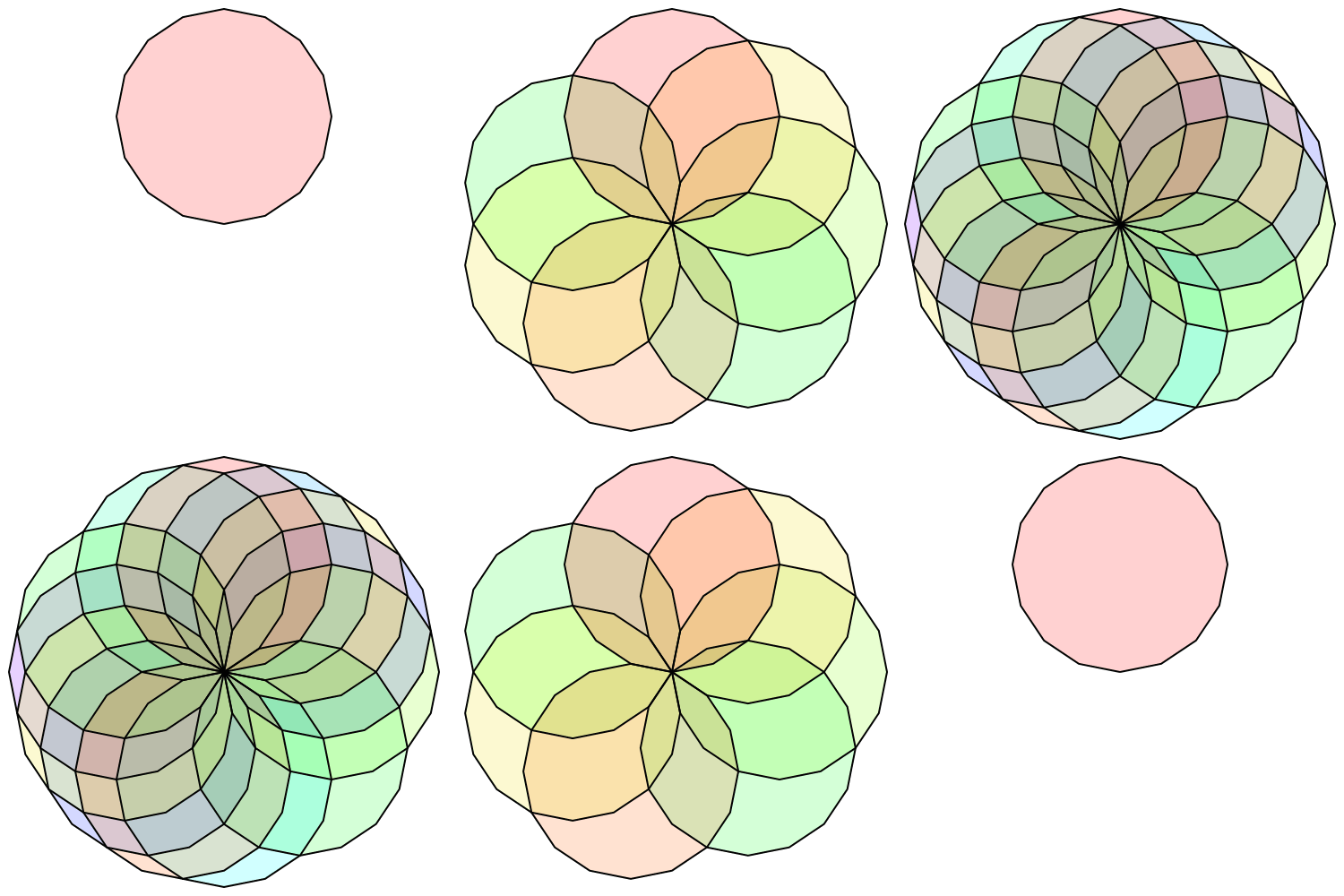
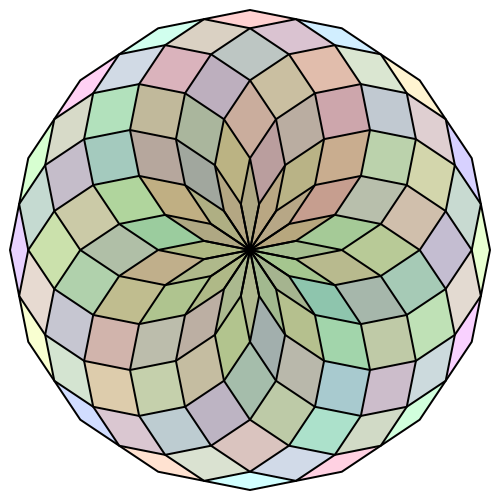

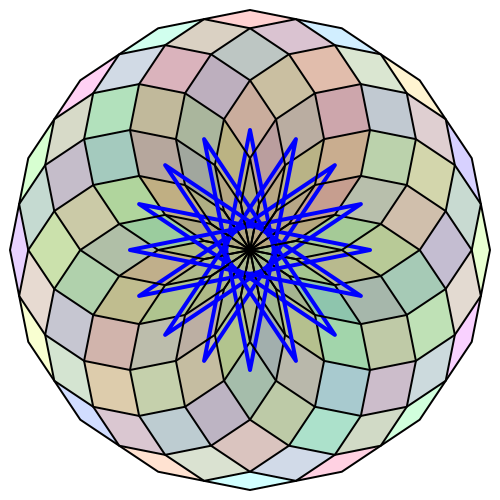
Fig.
16: 16-gons
Planimetrically,
the closing figure consists of 112 rhombuses with equal edge lengths.
2.15 17-gons
For
regular 17-gons, we need 34 steps (Fig. 17). The number of turns is 15.
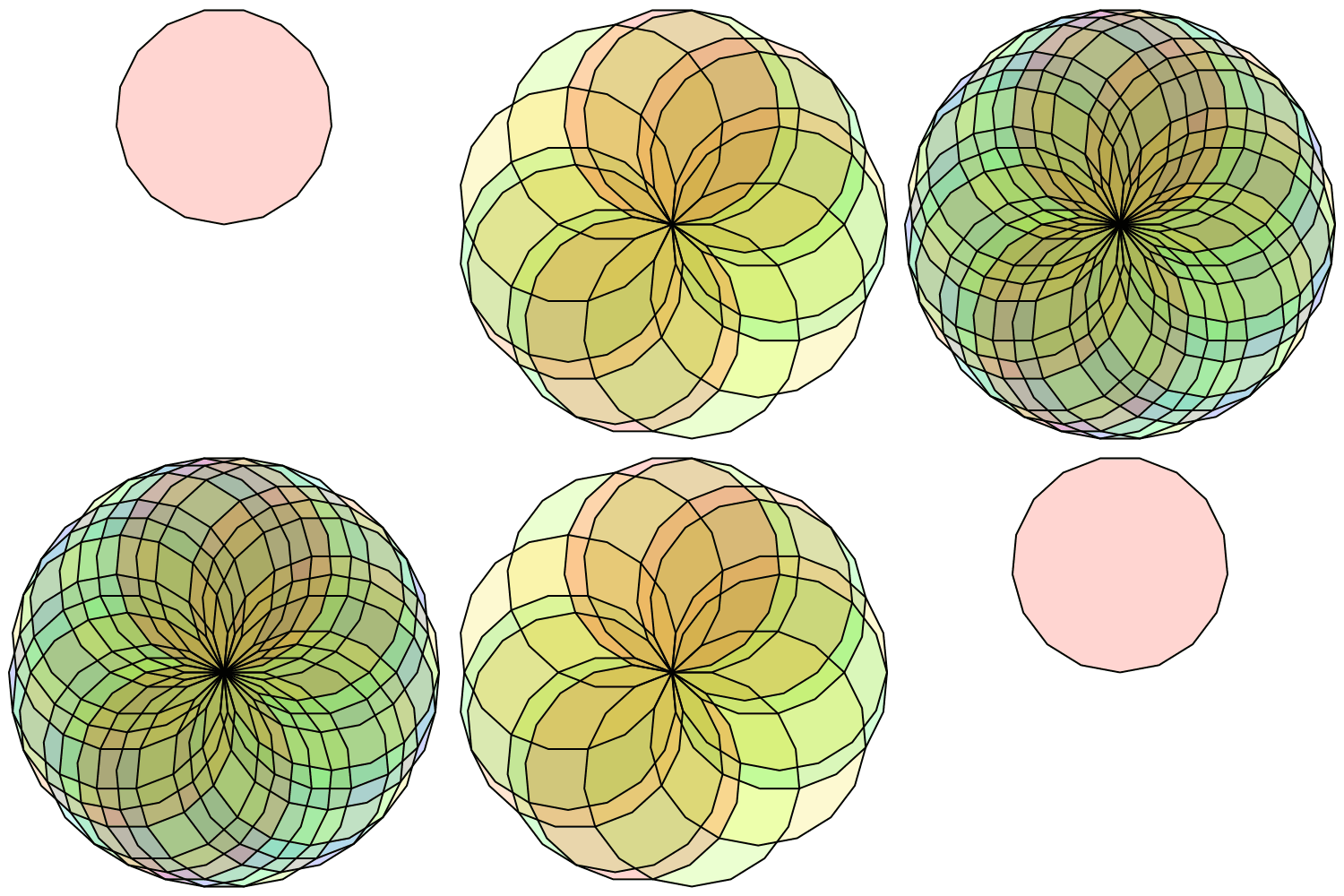
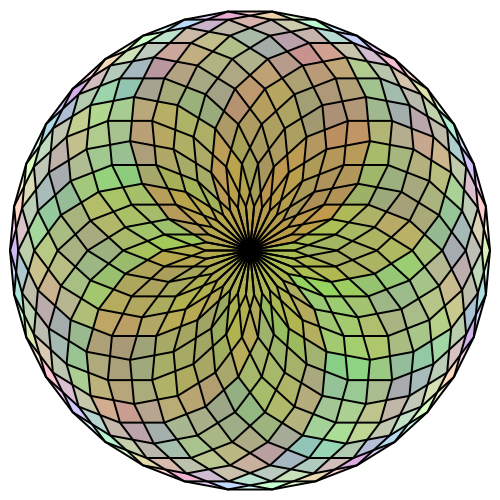


Fig.
17: 17-gons
2.16 18-gons
For
regular 18-gons, we only need 9 steps (Fig. 18). The number of turns is 4.
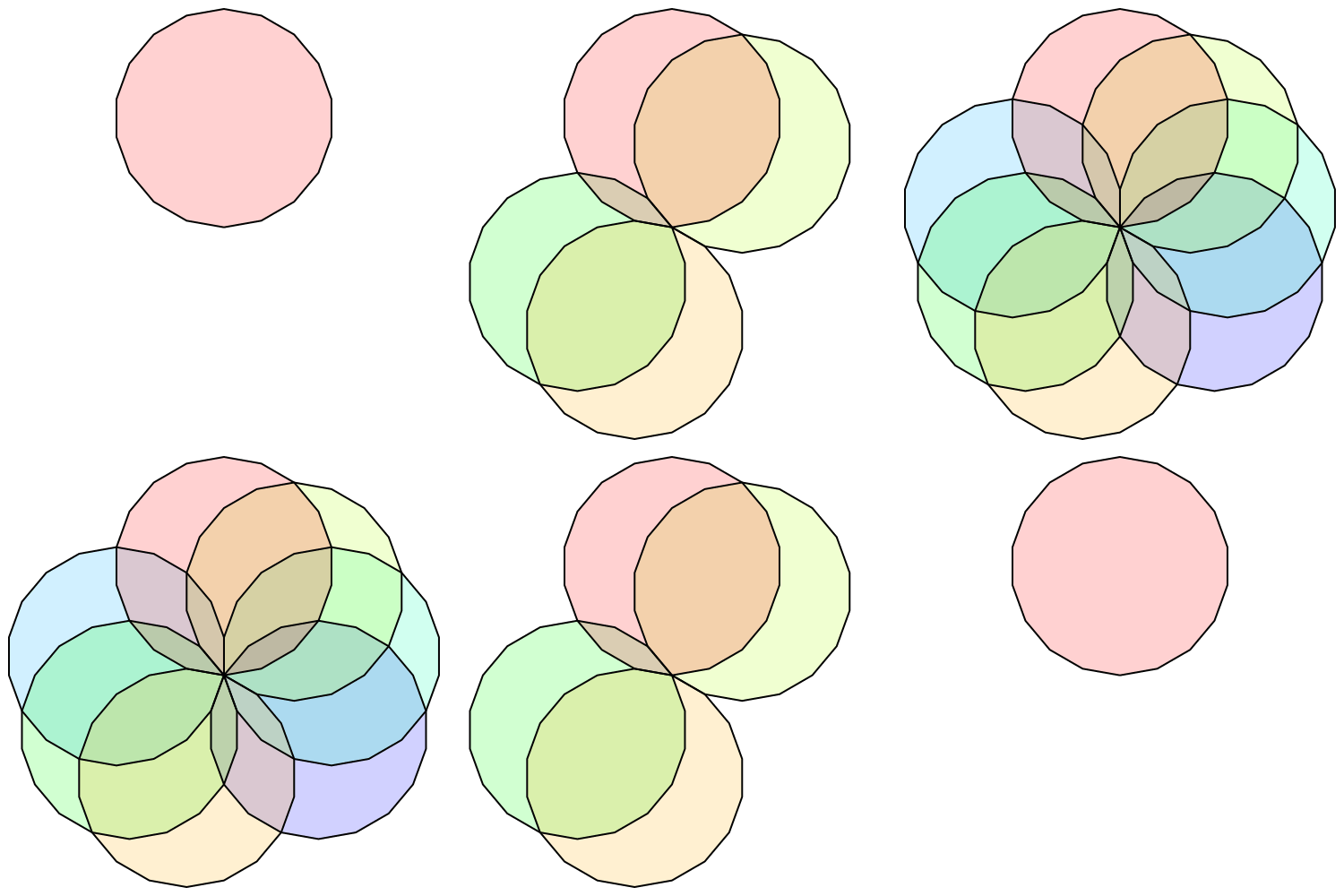
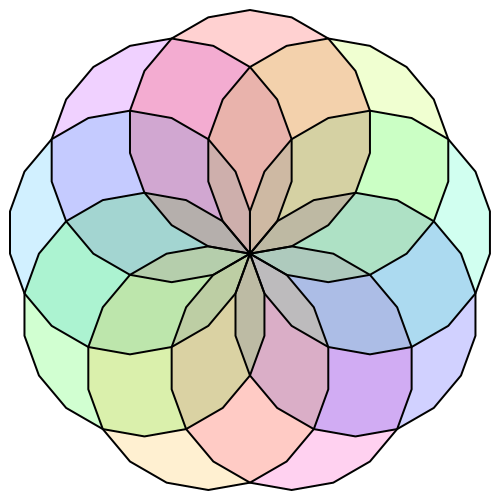
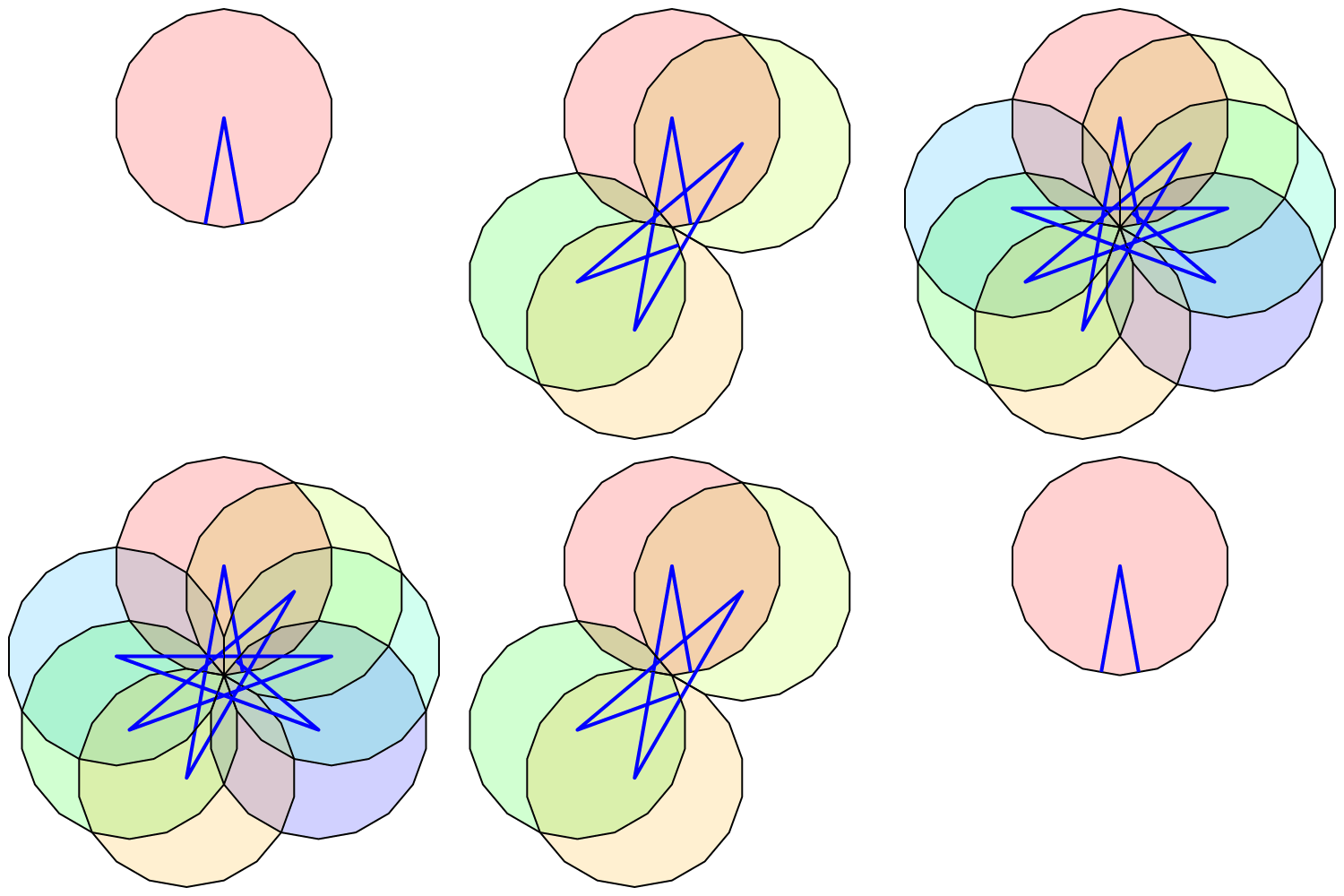

Fig.
18: 18-gons
2.17 19-gons
For
regular 19-gons, we need 38 steps (Fig. 19). The number of turns is 17.


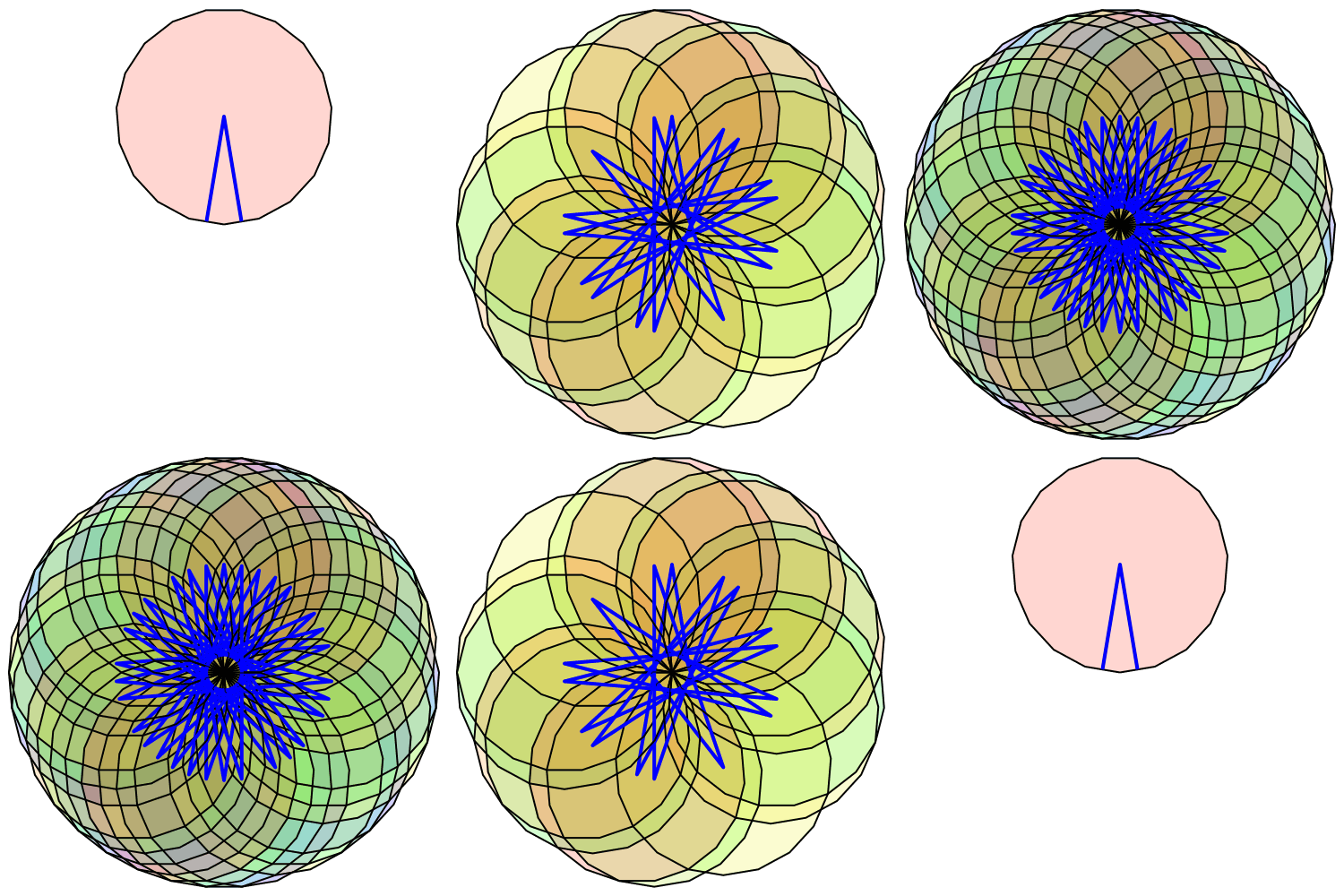

Fig.
19 19-gons
2.18 20-gons
For
regular 20-gons, we need 20 steps (Fig. 20). The number of turns is 9.
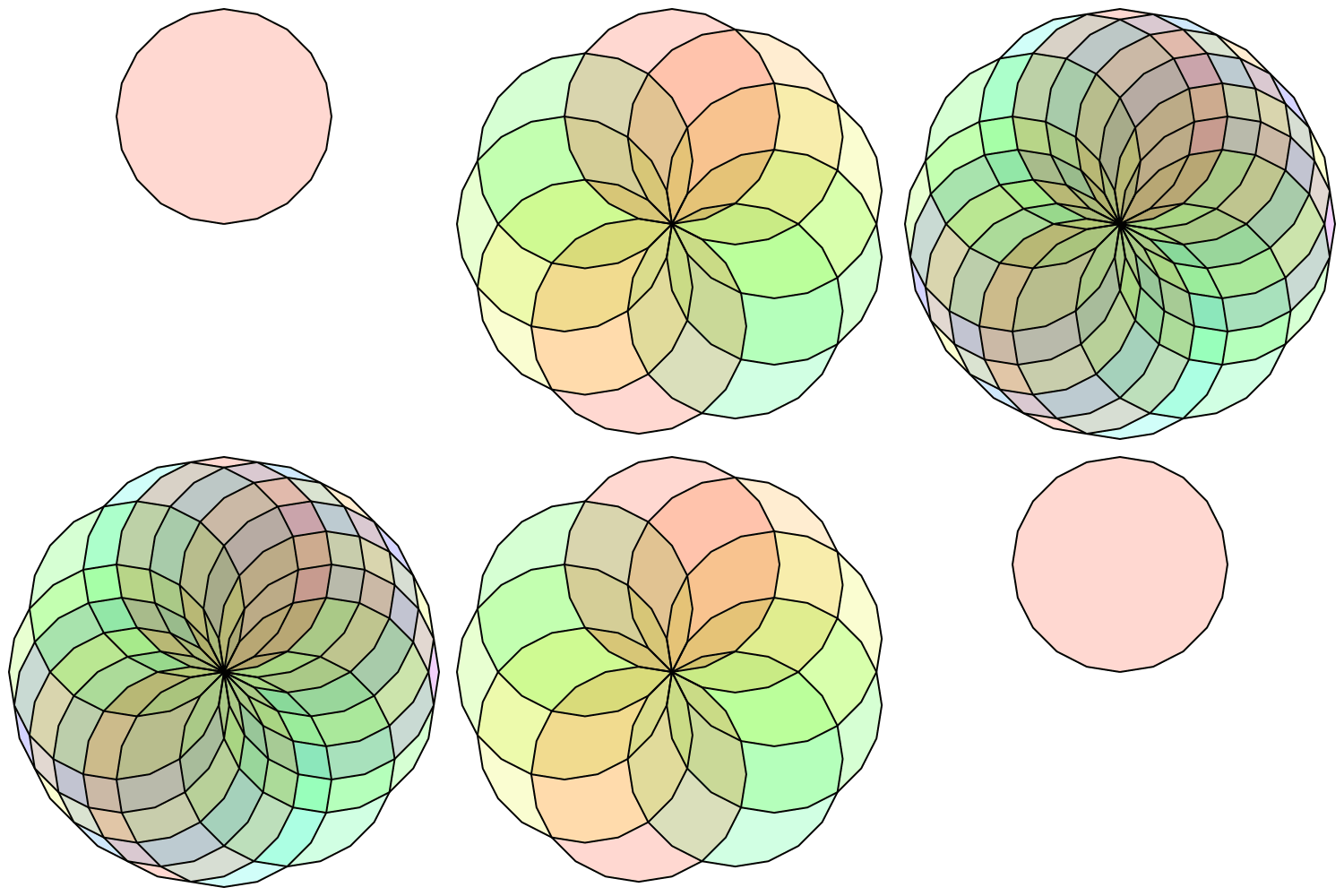
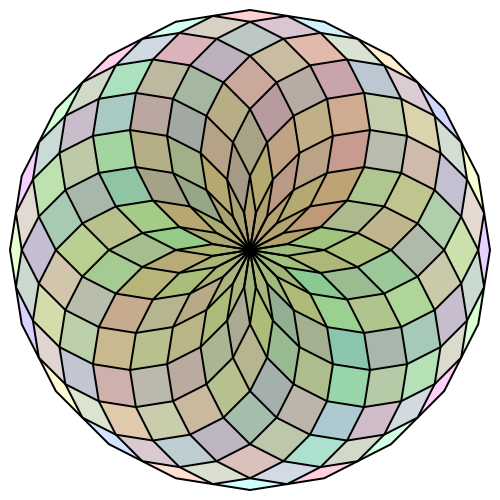


Fig.
20: 20-gons
The
closing figure, viewed planimetrically, consists of 180 rhombuses with equal
edge lengths.
3
Counts
The
required number of steps m and the number of turns u vary
considerably (Table 1)
|
#vertices
n |
#steps
m |
#turns
u |
|
|
3 |
6 |
1 |
|
|
4 |
4 |
1 |
Figure with four congruent squares |
|
5 |
10 |
3 |
|
|
6 |
3 |
1 |
|
|
7 |
14 |
5 |
|
|
8 |
8 |
3 |
Figure with 24 rhombuses of equal edge length |
|
9 |
18 |
7 |
|
|
10 |
5 |
2 |
|
|
11 |
22 |
9 |
|
|
12 |
12 |
5 |
Figure with 60 rhombuses of equal edge length |
|
13 |
26 |
11 |
|
|
14 |
7 |
3 |
|
|
15 |
30 |
13 |
|
|
16 |
16 |
7 |
Figure with 112 rhombuses of equal edge
length |
|
17 |
34 |
15 |
|
|
18 |
9 |
4 |
|
|
19 |
38 |
17 |
|
|
20 |
20 |
9 |
Figure with 180 rhombuses of equal edge
length |
Table
1: Number of steps and number of turns
The
following case distinction applies:
The number of vertices n is odd: We need
2n steps. The number of turns is n – 2.
The number of vertices n is even:
The number of vertices n is
divisible by 4: We need n steps. The number of turns is n/2 – 1.
The figure is a rhombic figure with n(n/2
– 1) rhombuses of equal edge length.
The number of vertices n is
not divisible by 4: We only need n/2 steps. The number of turns is (n
– 2)/4.