Hans
Walser, [20260706]
Sandpiles
Translated
from German with AI
1
What
it's about
Modeling
erosion
Kinematics
of the figures
2
Description
Iteration:
We imagine several stacks of squares placed next to each other. Individual
stacks may also be empty, meaning they have a height of zero. Furthermore, we
choose an upper bound. If a stack is higher than this upper bound, we remove
the top two squares and add one square each to the adjacent stacks on the left
and right.
Interpreting
the squares as grains of sand leads to a model of the erosion of a sandpile.
Hence the title.
3
Examples
3.1 Different upper bounds
The first
image (Fig. 1, far left) shows the initial situation. The upper bound 6 is
indicated by the blue bar.
The
following image shows the situation after the first step. The first stack,
which was too high in the initial situation, has been reduced by two squares,
which are now located as small stacks to the left and right of it.
The third
stack, which was also too high in the initial situation, has also initially
been reduced by two squares. One of these squares was given to the second stack
of the starting situation, the other to the fourth stack. Since this stack was
also too high, it had to transfer a square to the third stack, thus reducing
the third stack by only one square overall. The fourth stack, which was also
too high, initially had to give up two squares but received one from the third
stack. This fourth stack was therefore reduced by only one square overall.
The
number in the upper left of each figure indicates the current number of steps,
and the number in the upper right indicates the total number of steps required
to comply with the limit everywhere.

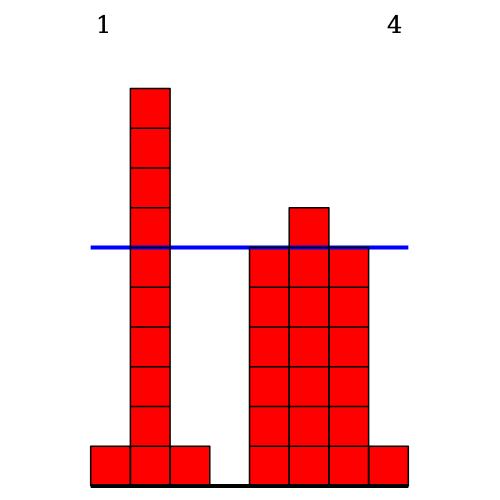
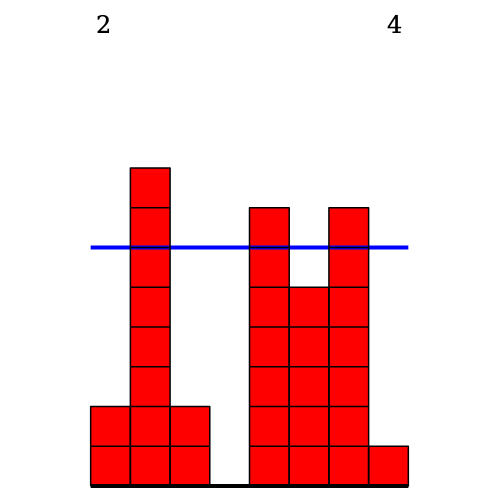
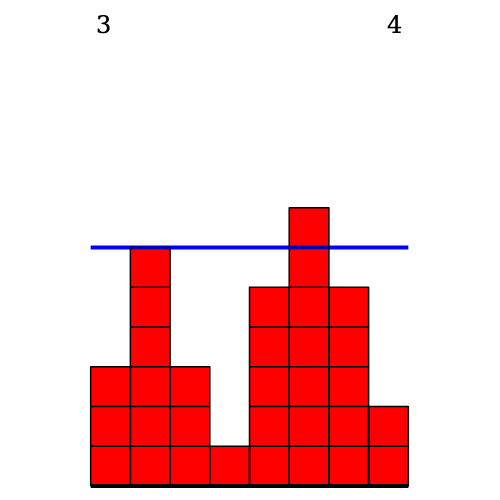
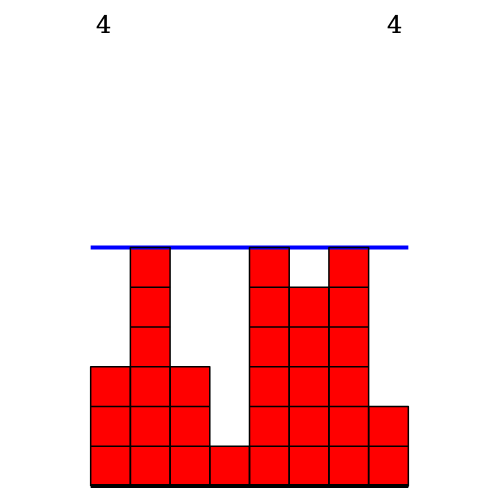
Fig.
1: Upper bound 6
Figure 2
shows the kinematics of the process at one-second intervals.
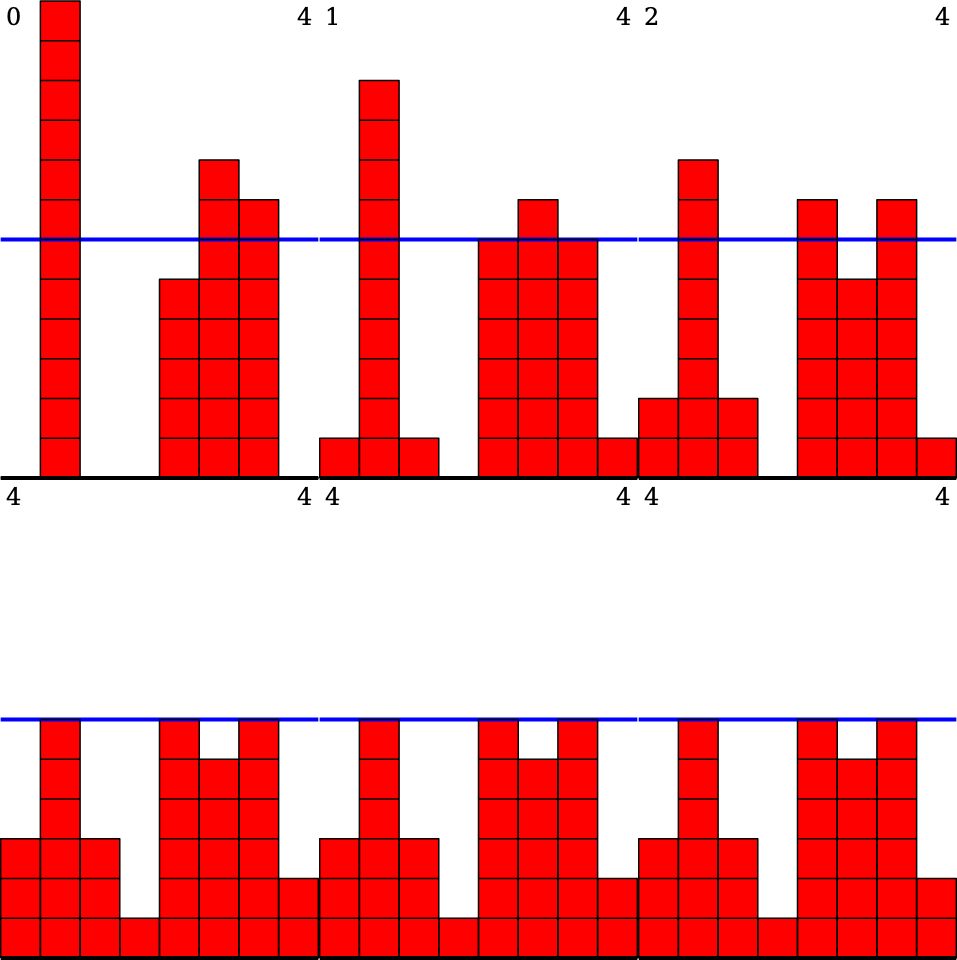
Fig.
2: Kinematics
If the upper
bound is lowered to 5, the required number of steps also increases,
coincidentally to 5 (Fig. 3).
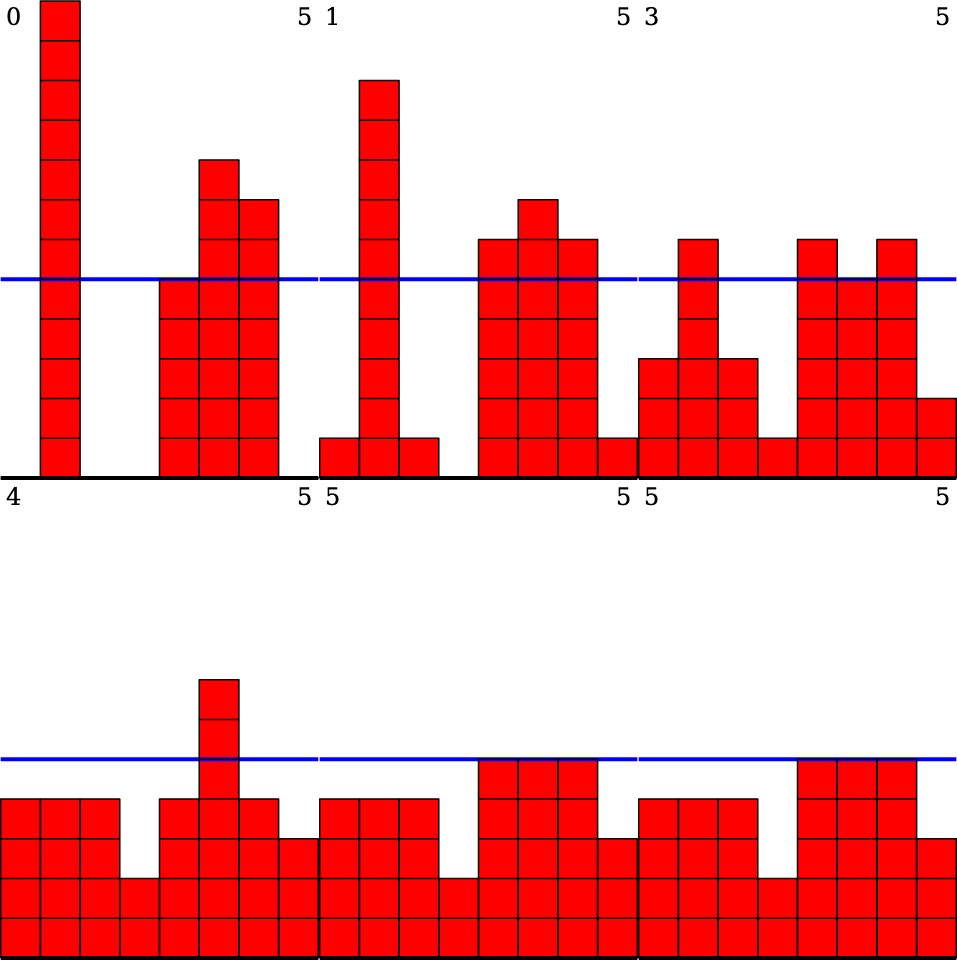
Fig.
3: Upper bound 5
At upper
bound 4, we need 9 steps (Fig. 4).
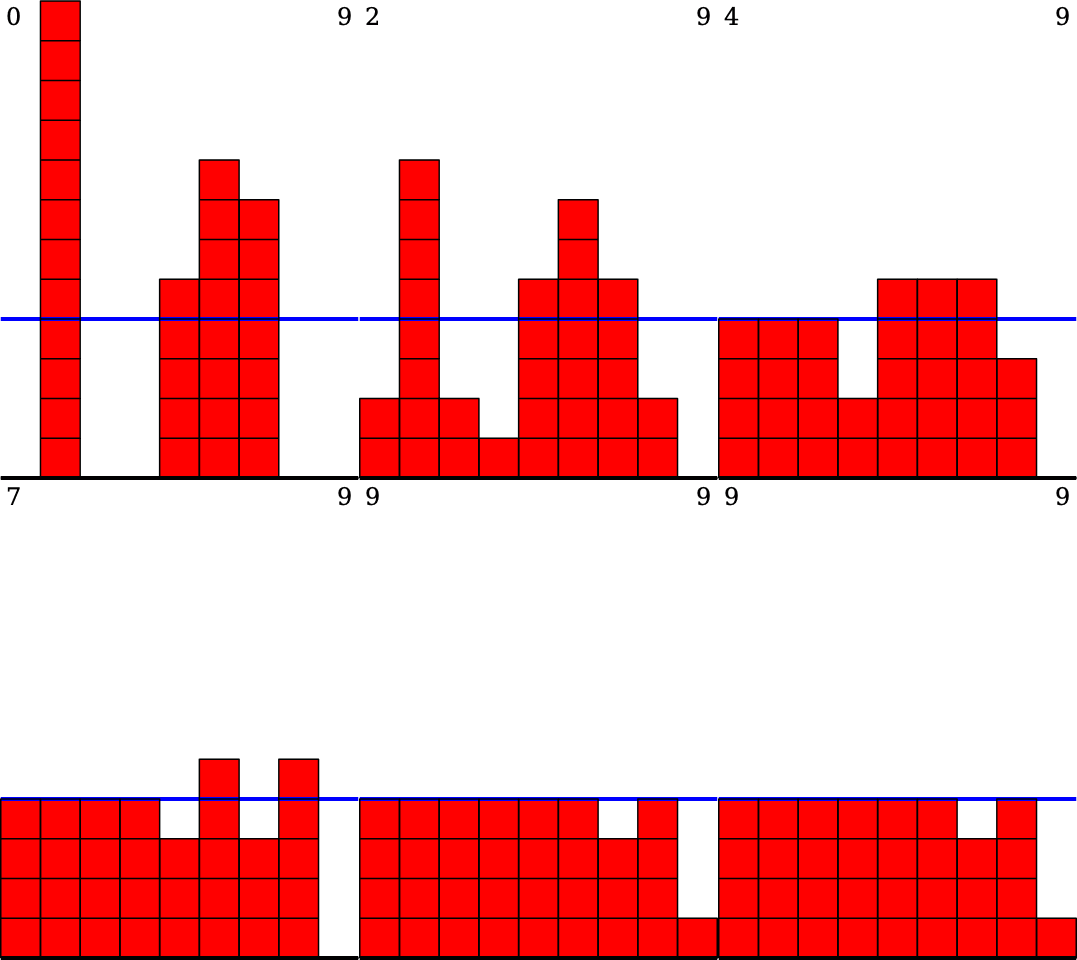
Fig.
4: Upper bound 4
At upper
bound 3, we need 30 steps (Fig. 5).
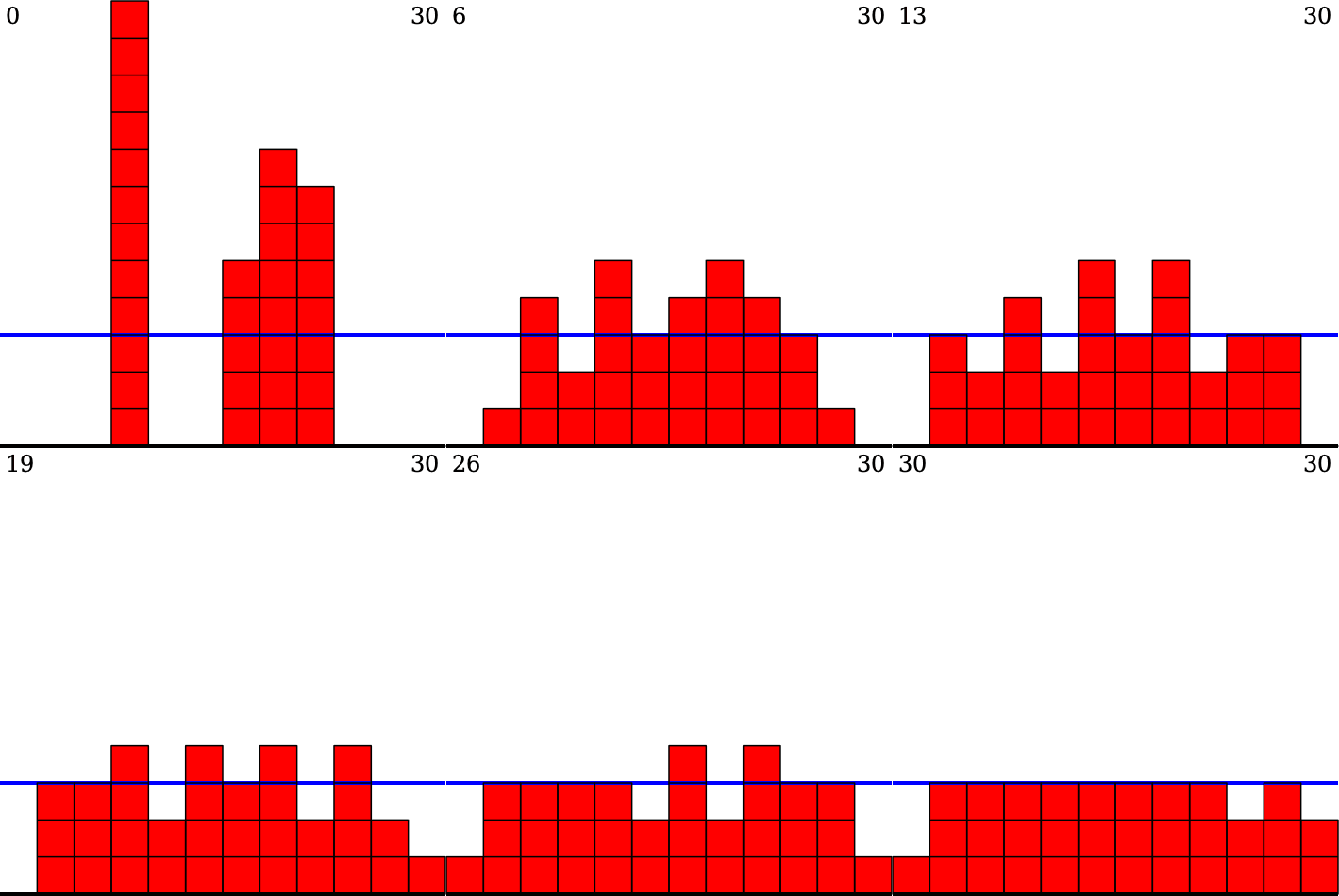
Fig.
5: Upper bound 3
At upper
bound 2, we need 61 steps (Fig. 6).
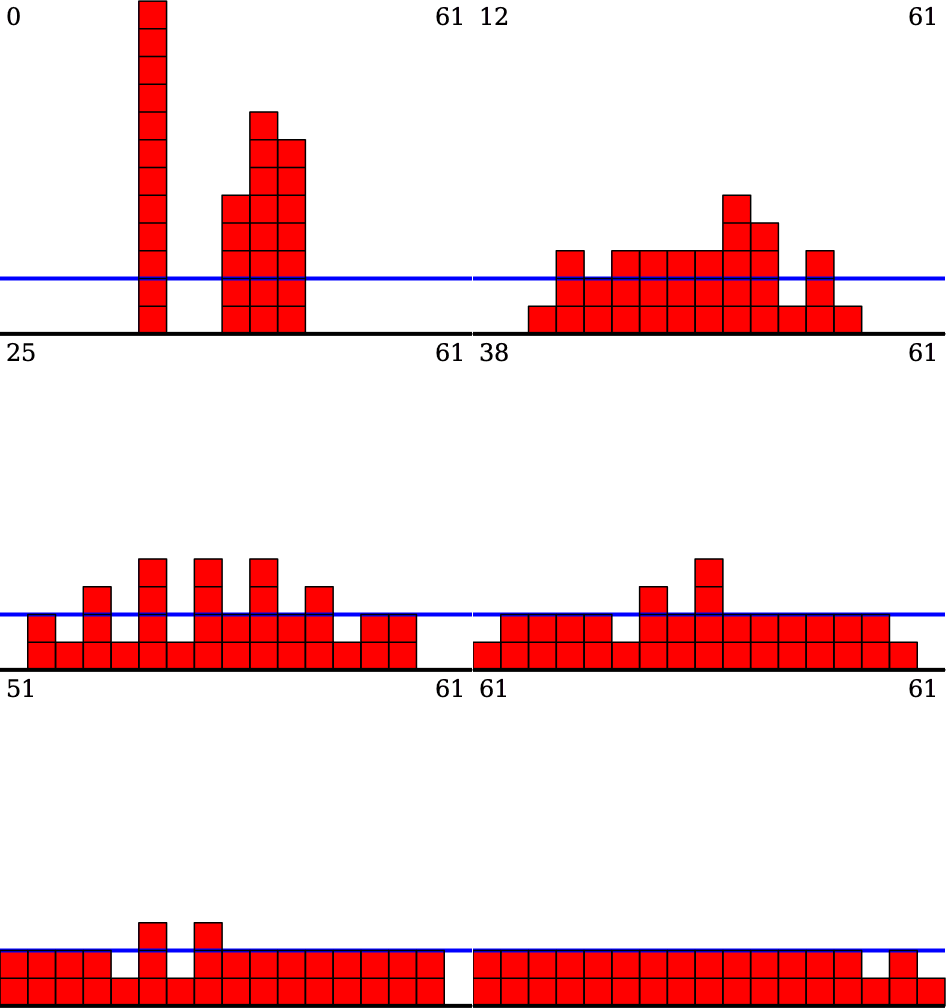
Fig.
6: Upper bound 2
At upper
bound 1, we need 168 steps, which is almost three minutes (Fig. 7).
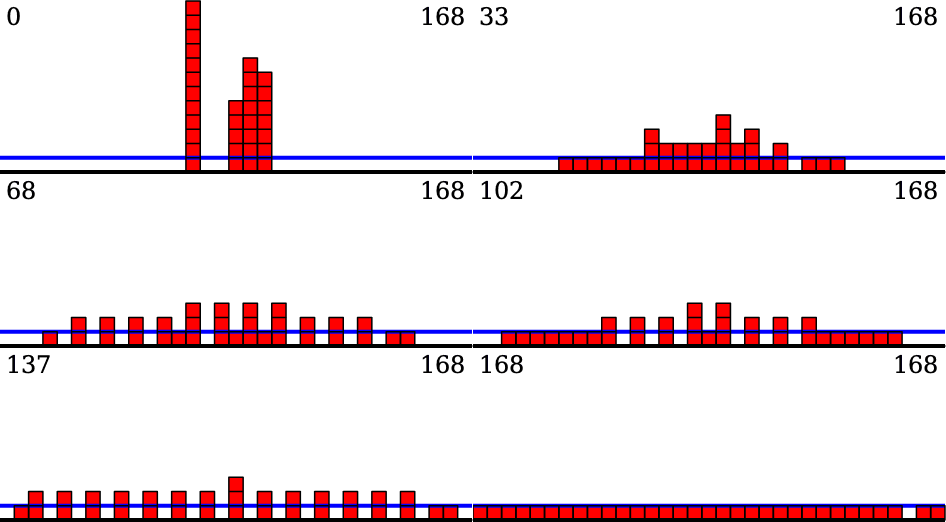
Fig.
7: Upper bound 1. Not one stone here will be left on another
For
know-it-alls: How many steps are needed for upper bound zero?
3.2 Reducing Squares
Reducing
a 4×4 square requires 35 steps (Fig. 8).
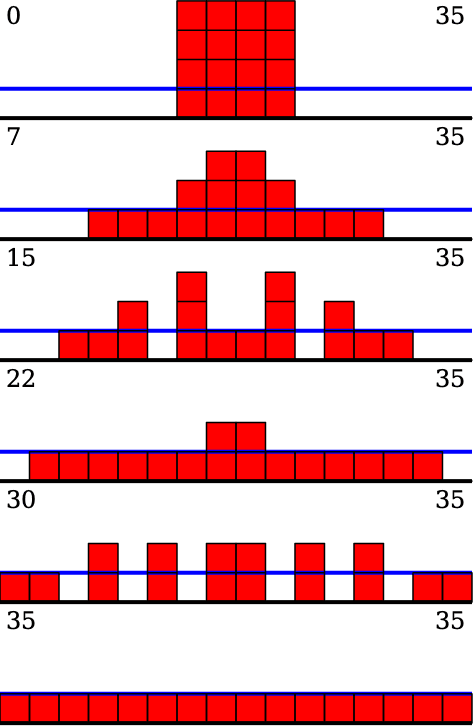
Fig.
8: Reducing a 4×4 Square
Reducing
a 5×5 Square requires 95 steps (Fig. 9).

Fig.
9: Reducing a 5×5 square
3.3 Stepped gables
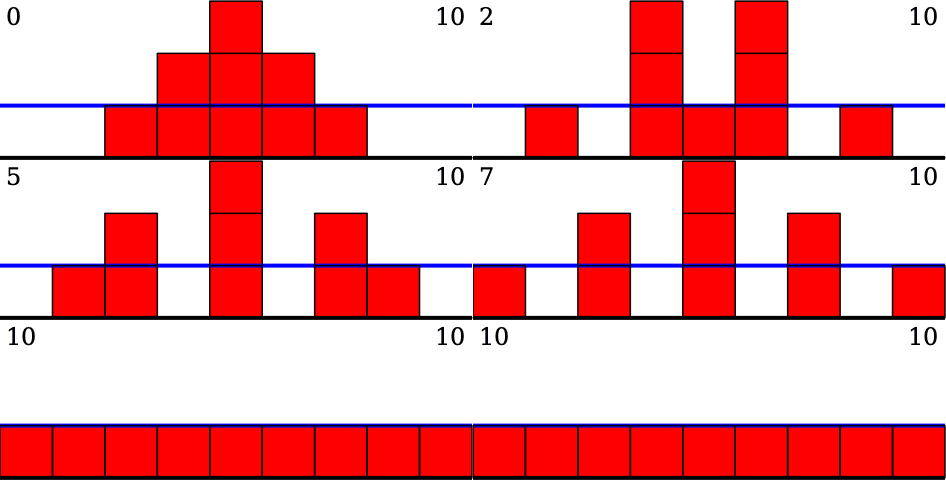
Fig.
10: Stepped gable
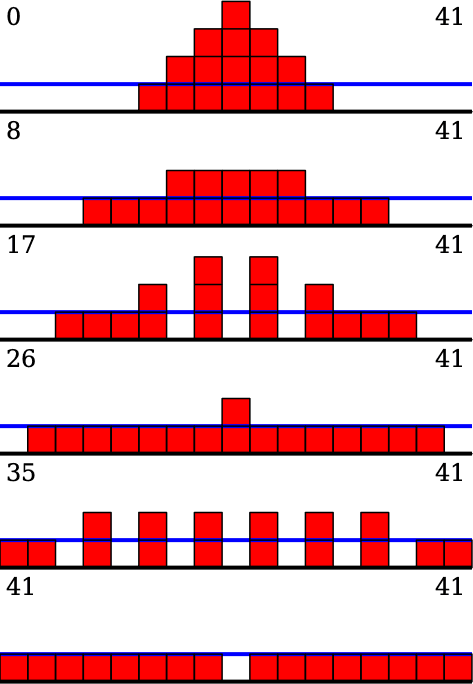
Fig.
11: Stepped gable
Weblinks
Hans
Walser: Sandhaufen
https://walser-h-m.ch/hans/Miniaturen/S/Sandhaufen/Sandhaufen.html
Hans
Walser: Sandpiles
https://walser-h-m.ch/hans/Miniaturen/S/Sandhaufen/Sandpiles.html