Hans
Walser, [20260609]
Cube Fractal
1
Construction
We attach
four cubes of half the edge length diagonally to a cube, such that the contact
vertices form a regular tetrahedron (Fig. 1).
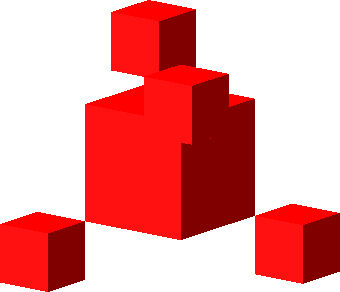
Fig.
1: First Step
We then
attach four more cubes to each of the attached cubes. Their edge length is
one-quarter of the edge length of the initial cube. The contact vertices should
again each form a regular tetrahedron, but be different from the contact
vertices of the first step (Fig. 2).
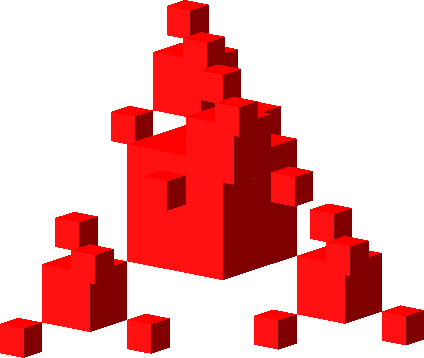
Fig.
2: Second Step
Figure 3
shows further steps. A total of 7 steps are shown.
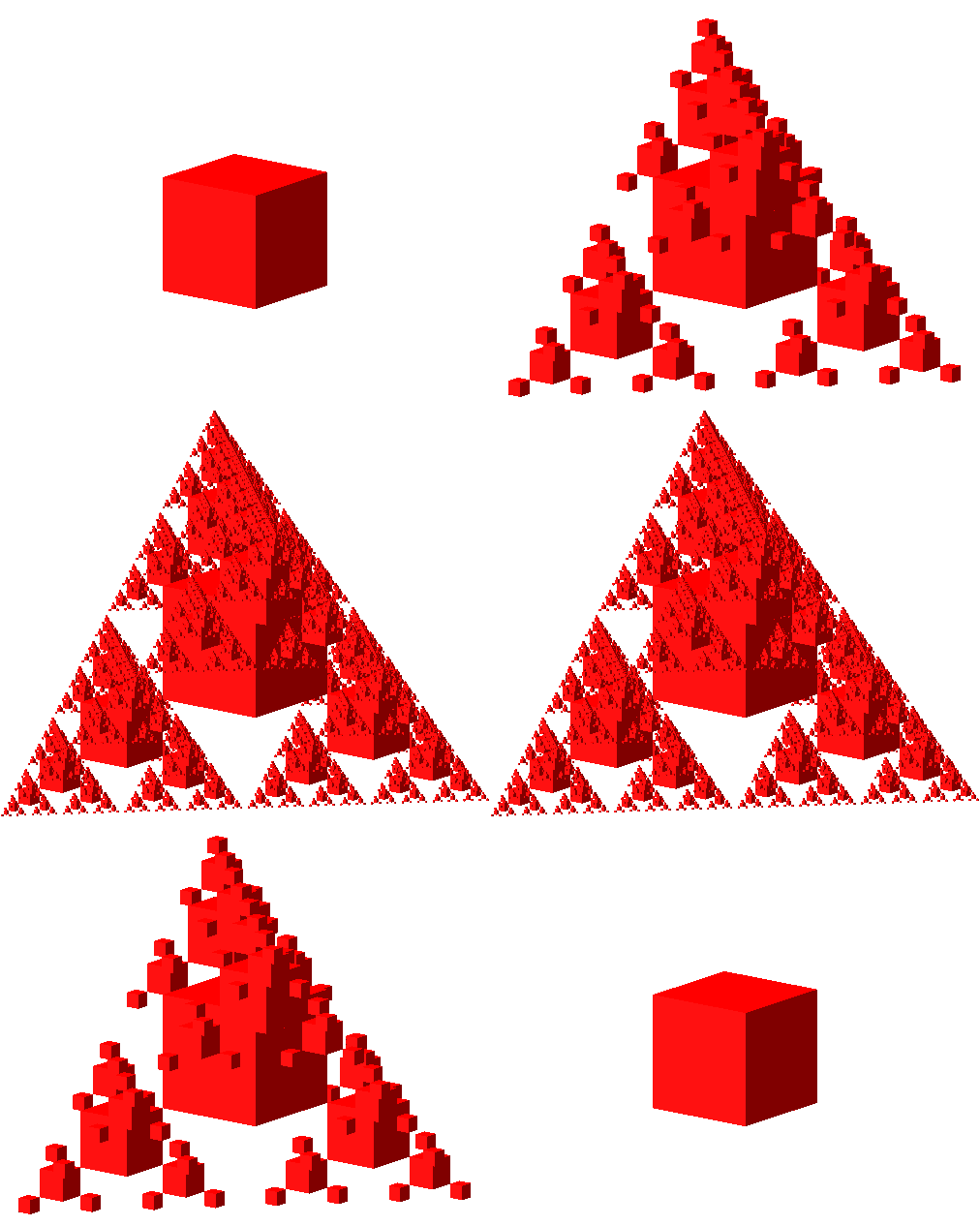
Fig.
3: The first seven steps
2
Special
Views
In Figure
4, the figure with the first five steps is rotated. The outline of the figure
is a regular tetrahedron.
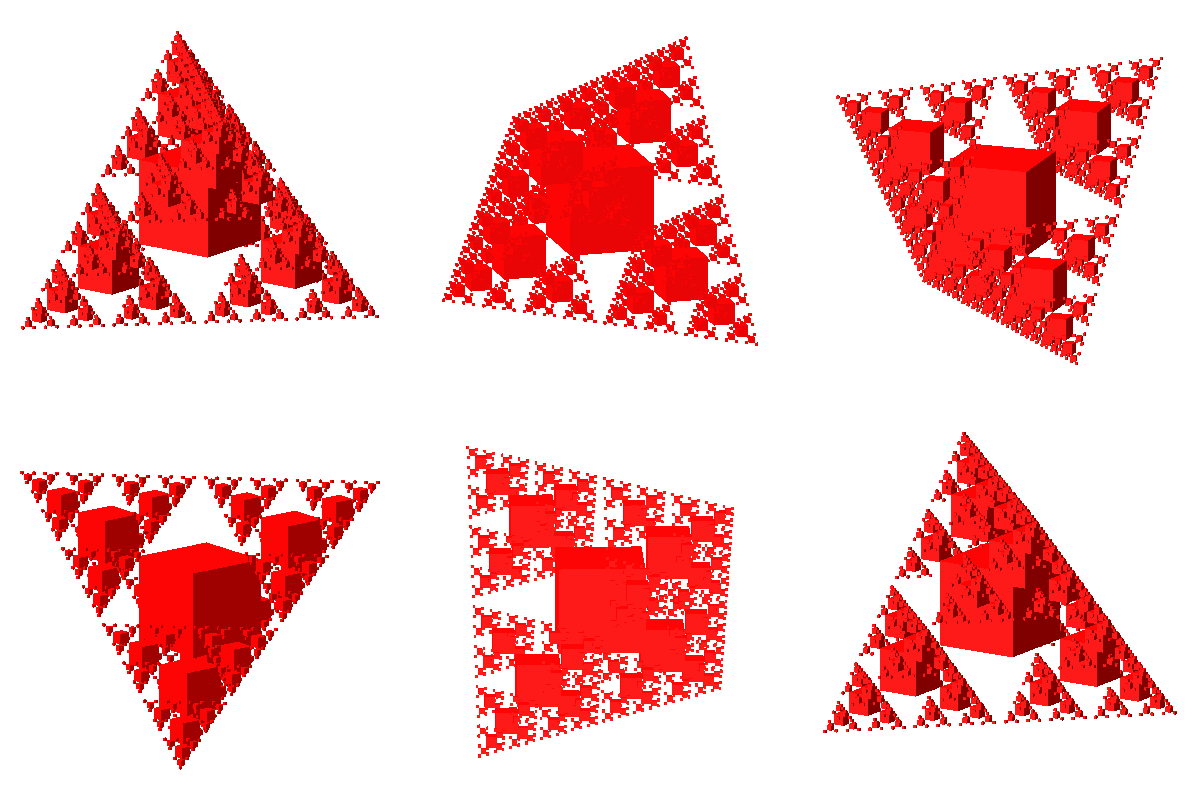
Fig.
4: Rotation
The
figure is the Sierpiński tetrahedron (a 3D version of
the Sierpiński triangle), with a dual cube fitted
into each recessed octahedron. The curious thing is that the cubes cannot be
removed, because otherwise the entire figure disappears.
2.1 Front View
Figure 5
shows the first six steps from the front view (relative to the front face of
the initial cube).
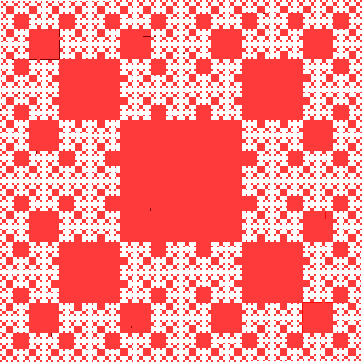
Fig.
5: Front View
2.2 View over an Edge
Figure 6
shows the first six steps seen over the edge of the starting cube.
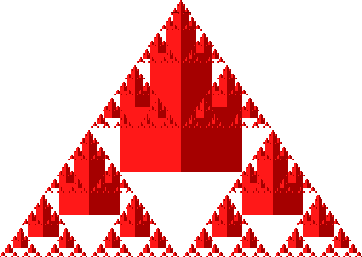
Fig.
6: Edge View
2.3 View over a Vertex
Figure 7
shows the first six steps seen along the space diagonal of the initial cube.
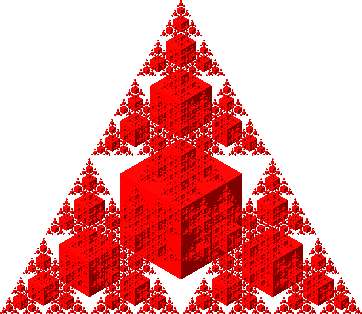
Fig.
7: Vertex View
3
Circumspheres
Figure 8
shows the circumspheres of the cubes.
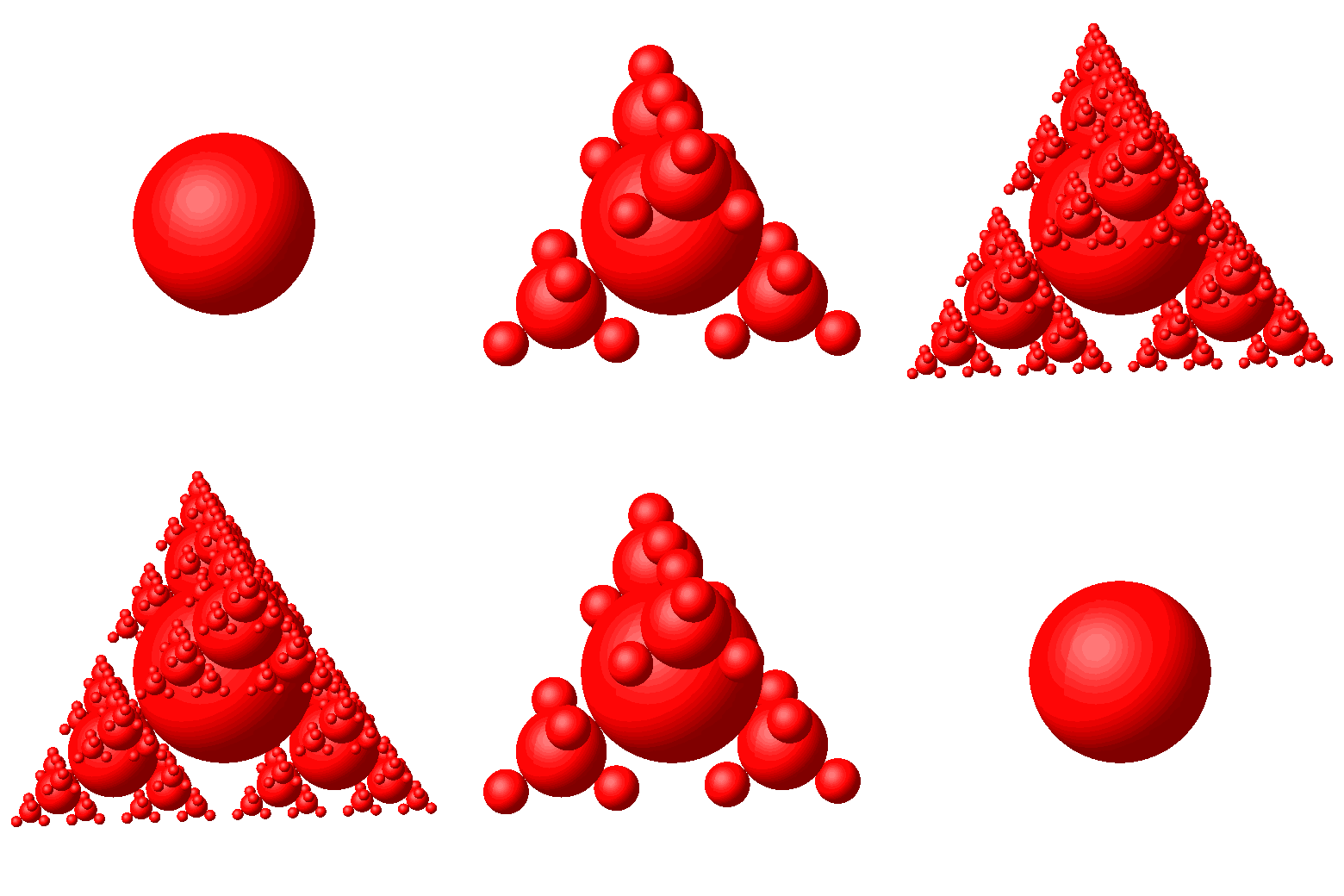
Fig.
8: Circumspheres of the cubes
Weblinks
Hans Walser: Würfelfraktal
https://walser-h-m.ch/hans/Miniaturen/W/Wuerfelfraktal/Wuerfelfraktal.html
Hans Walser: Würfelfraktal
https://walser-h-m.ch/hans/Miniaturen/W/Wuerfelfraktal2/Wuerfelfraktal2.html
Hans Walser: Würfelfraktal
https://walser-h-m.ch/hans/Miniaturen/W/Wuerfelfraktal3/Wuerfelfraktal3.html
Hans Walser: Würfelfraktal
https://walser-h-m.ch/hans/Miniaturen/W/Wuerfelfraktal4/Wuerfelfraktal4.html